May 19, 2026
Under-Deck Drainage and Storage: Use the Space Below
By Coastal Concepts Construction · 4 min read
How under-deck drainage systems work, what they cost relative to the deck, and how coastal homeowners turn the space below an raised deck into dry storage.
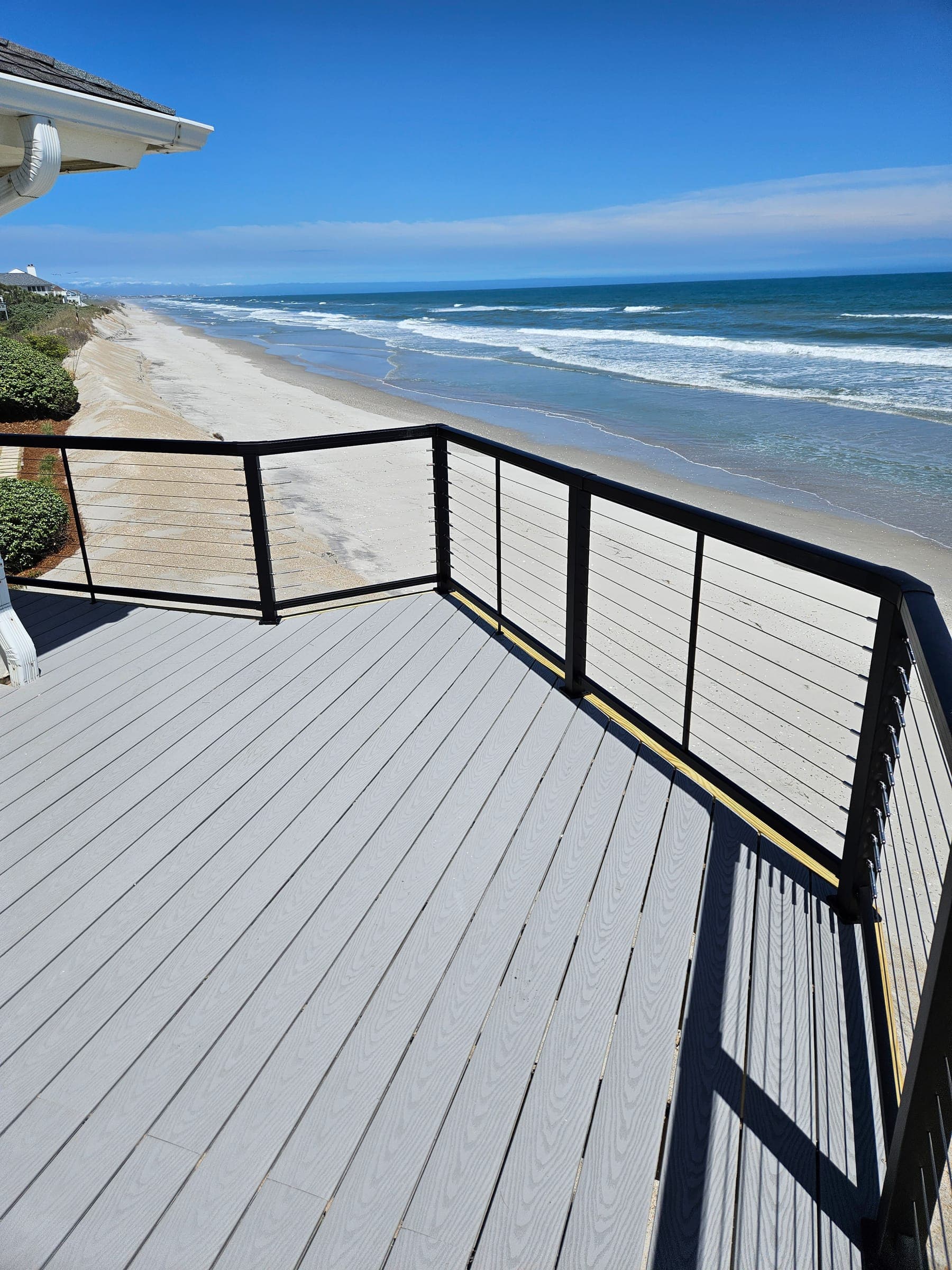
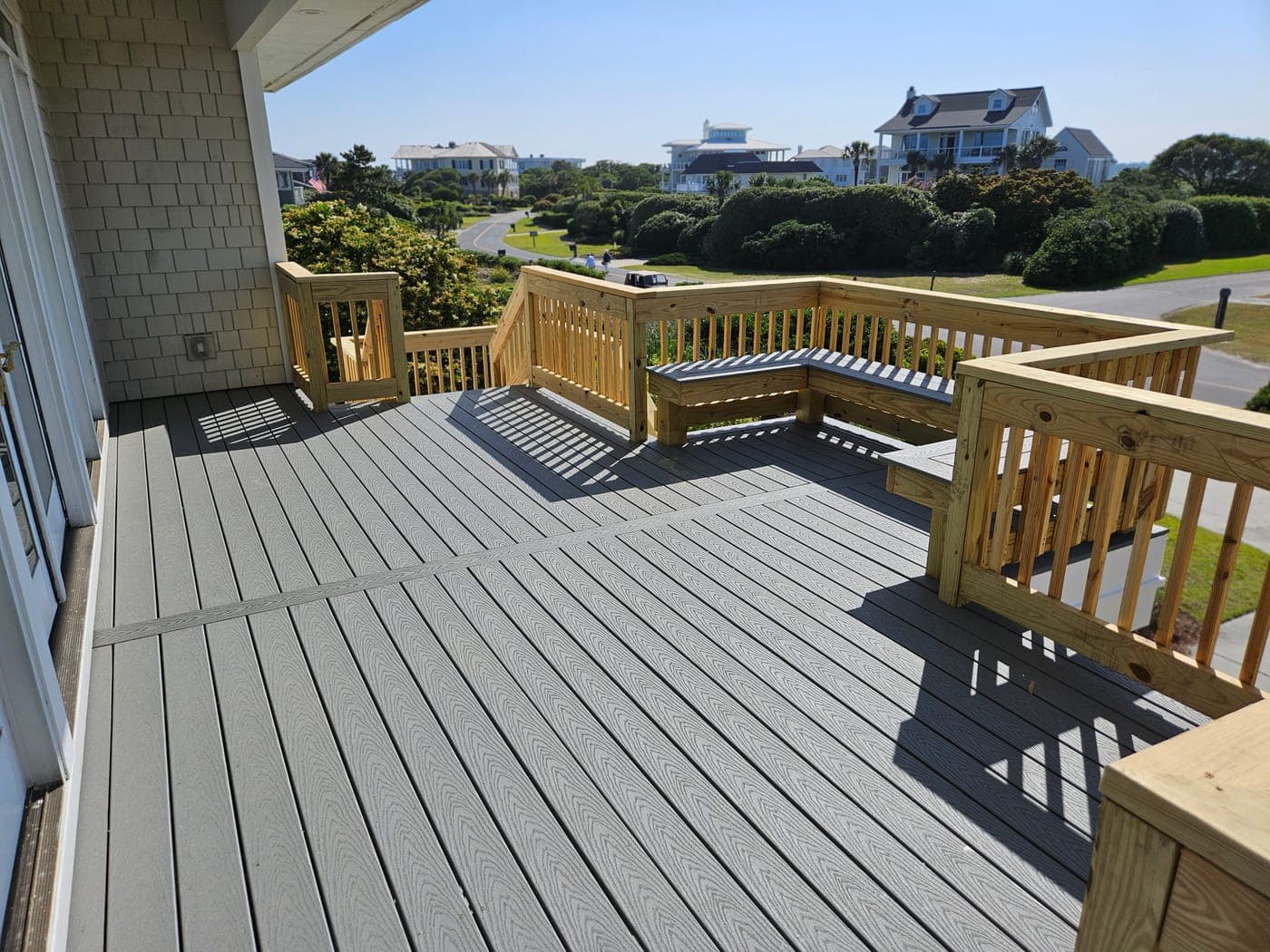
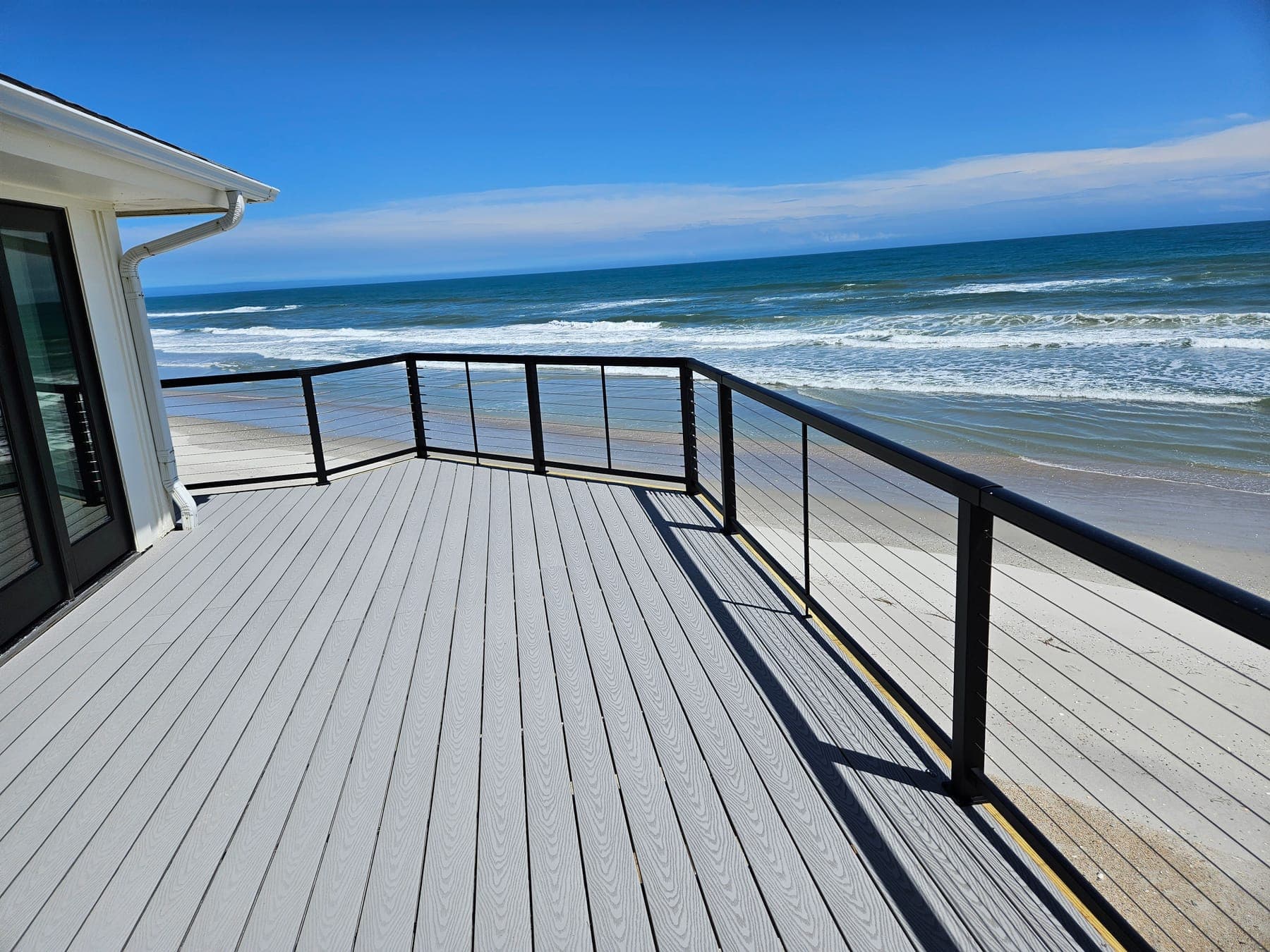
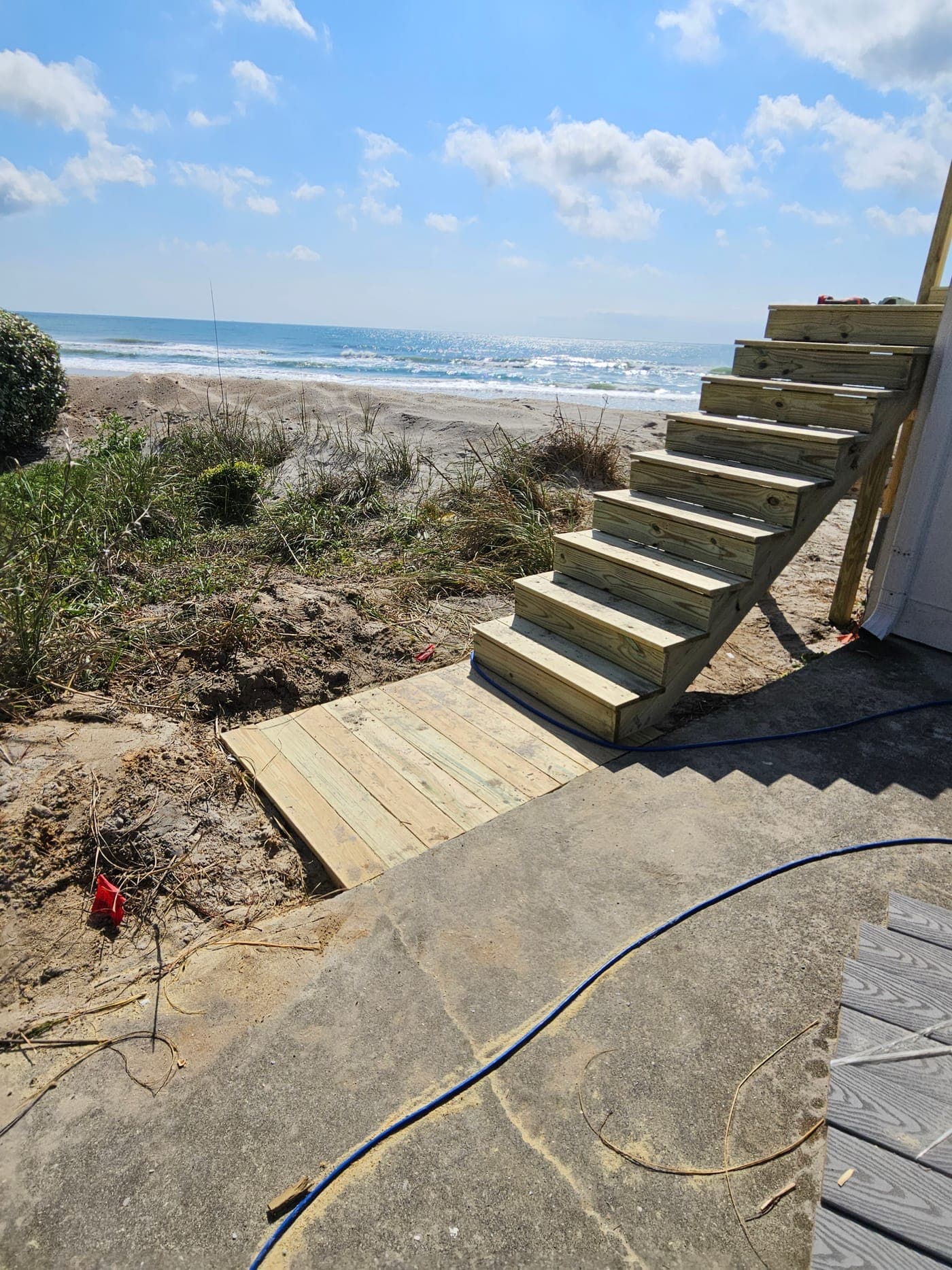
raised decks are everywhere on this coast, on beach houses built up on pilings and on the sloped lots around Ogden and Porters Neck, and most of them are wasting the best storage and living space on the property: the dry-ish rectangle underneath. With a drainage system, that space goes from "where the spiders live" to genuinely useful. Here's how it works and when it's worth doing.
The problem: decks rain
Deck boards are gapped so water drains through, which means everything below gets dripped on indefinitely. Store anything under an undrained deck and it grows a green film by June. Worse, in our humidity, the shaded damp zone under a deck is a mildew farm, and if it's against the house, it keeps moisture near your crawl space and siding.
How under-deck drainage systems work
There are two families of system, and the difference matters.
Above-joist systems install during construction: a membrane or trough network sits on top of the joists, under the decking, catching water before it ever touches the frame and channeling it to a gutter at the deck's edge. This protects the framing itself from constant wetting, which on the coast is a real longevity upgrade, and it leaves the underside of the deck clean and finishable. The catch: it's a during-the-build decision, or a during-the-redecking decision, because the decking has to come up to install it.
Below-joist systems are ceiling panels, usually vinyl or aluminum, hung beneath the joists with a slight pitch to a gutter. These retrofit onto existing decks without touching the decking, and they create a finished ceiling over the space below. The trade-off is that the framing above still gets wet, and the panels need occasional cleanout where debris washes in through the deck gaps.
Either way, the water has to go somewhere deliberate: a gutter and downspout carrying it away from the foundation, not just a drip line relocated six feet.
What the dry space is worth on the coast
Under a beach house or a tall backyard deck, a dry bay is some of the most valuable unconditioned space you can create:
- Beach and boat gear. Chairs, umbrellas, coolers, crab pots, kayaks and paddleboards on wall racks. Gear that lives dry lasts years longer than gear that lives wet.
- A screened or open lower patio. With a ceiling system overhead and a fan, the shaded space under an raised deck is often the coolest spot on the property in July. On beach-town lots we finish these into genuine second living areas.
- An outdoor shower and changing area, plumbed on the house wall in the dry zone.
- Lawn equipment and workshop overflow on inland lots where there's no garage to spare.
One flood-zone note for the beach towns: in mapped V and coastal A zones, what you can enclose below an raised house is regulated, and enclosed areas below base flood elevation are limited to parking, access, and storage with flood-vented, breakaway construction. Storage racks and a drainage ceiling are usually fine; walling in a room is a different conversation. We check the zone before proposing anything.
Cost and timing
A below-joist ceiling retrofit is priced by square footage and typically runs a modest fraction of the deck's own cost. Above-joist membranes are cheapest at build time, when they add a small percentage to a new deck project; as a reference, our new decks generally run $4,000 to $25,000, and adding drainage during construction is far cheaper than any retrofit. If your decking is due for replacement anyway, that's the golden moment: repair-and-redeck projects, typically $800 to $6,500 depending on scope, can include an above-joist system while the boards are off.
The takeaway
If you're building an raised deck, decide about under-deck drainage now, not later, even if "deciding" just means telling us to make the framing drainage-ready. If your existing deck already shades a damp gravel pit, a ceiling system and a couple of downspouts can turn it into the driest storage on the lot.
We build and retrofit these across New Hanover, Pender, and Brunswick counties. Request a free written estimate at our estimate page and we'll look at the deck, the drainage, and what the space underneath could be doing for you.
Pricing a project?
Get an instant range
Pick your project type and see a real price range in seconds — based on jobs we’ve actually completed around Wilmington.
Common questions
Can under-deck drainage be added to an existing deck?
Yes. Below-joist ceiling systems hang beneath the frame and retrofit without removing decking. Above-joist membrane systems protect the framing itself but require the decking to come up, so they fit best during construction or a redecking project.
Is it OK to store things under a deck at the beach?
With a drainage system and airflow, yes, and it's excellent gear storage. In mapped flood zones, enclosed space below base flood elevation is limited to parking, access, and storage with proper flood venting, so racks and ceilings are fine while fully walled rooms may not be.
How much does an under-deck drainage system cost?
A modest fraction of the deck itself: above-joist membranes add a small percentage to a new build, and below-joist ceiling retrofits are priced by square footage. Bundling drainage with a redecking or repair project, typically $800 to $6,500, is often the most economical route.