April 21, 2026
Pool Deck and Surround Ideas for Coastal NC Backyards
By Coastal Concepts Construction · 3 min read
Practical pool deck and surround options for coastal North Carolina, comparing surfaces for bare feet, salt systems, and code-required barriers.
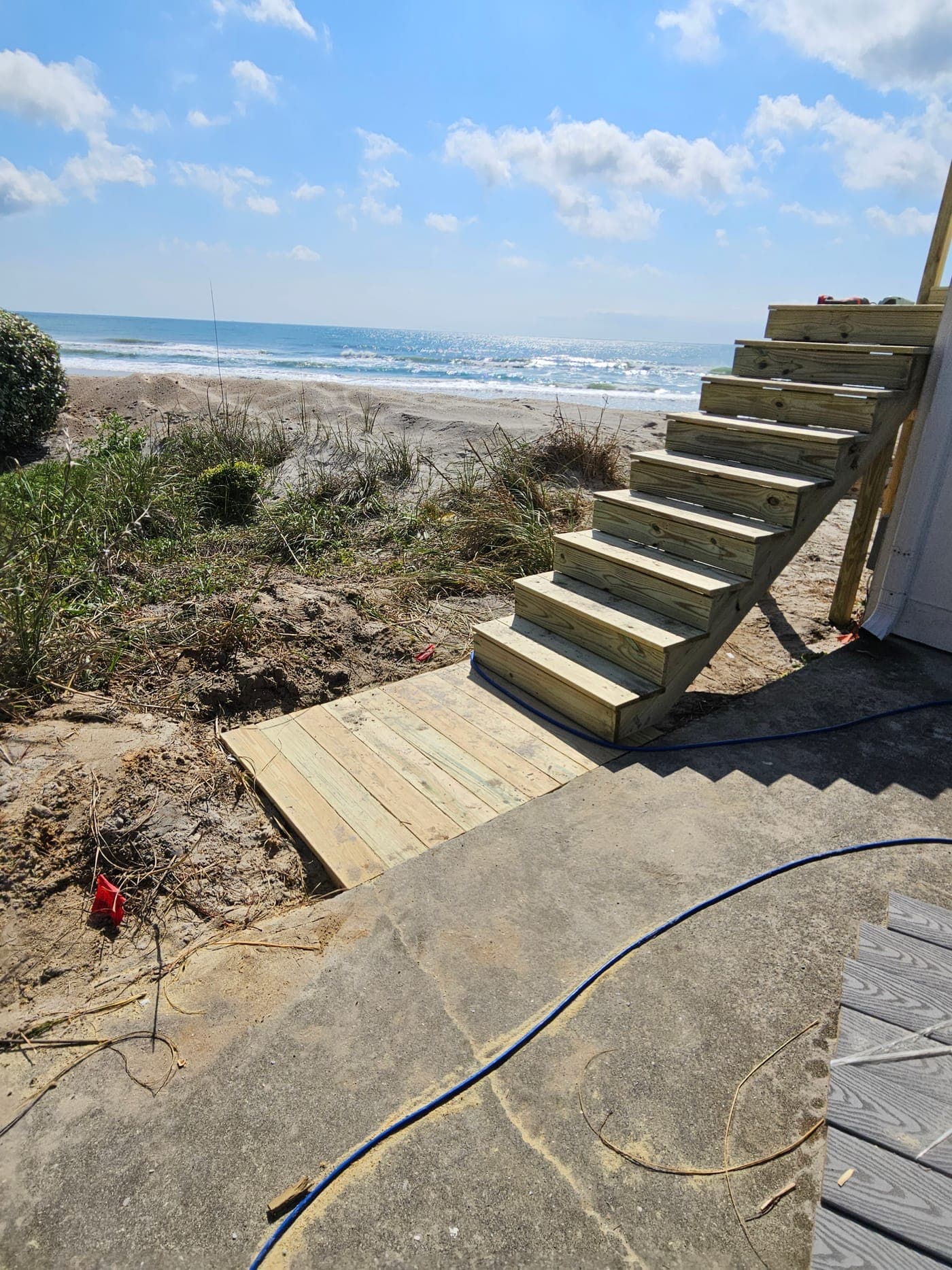
Backyard pools have multiplied around Wilmington, Hampstead, and Leland over the past few years, and a pool is only as good as the surface around it. We build pool decks and surrounds across the area, and the coastal setting changes the calculus: bare feet on July surfaces, salt systems splashing on materials, and fencing rules that aren't optional. Here's how we think through it.
Start with the barefoot test
Whatever surrounds your pool will be walked on barefoot, wet, in full sun, at 2 p.m. in August. Surface temperature and slip resistance beat looks every time. Ranked by how they treat your feet in high summer: lighter-colored concrete and textured pavers stay the most tolerable; light-colored composite decking is manageable; dark composite and dark stone get genuinely hot; and smooth troweled surfaces of any color get slick the moment they're wet.
The main surround options
Broom-finished or textured concrete. The workhorse. Durable, economical per square foot, and the broom texture gives wet feet grip. Plain gray is fine; integral color or a light exposed-aggregate finish looks better and hides sand. The coastal caveat is that concrete cracks where soils move, so base prep in our sandy ground matters more than the finish.
Pavers. Our most-recommended surround for above-entry-level budgets. Individual units flex with sandy soil instead of cracking, damaged sections lift and relay invisibly, and lighter blends stay comfortable underfoot. They also drain well between joints, which suits our thunderstorm downpours.
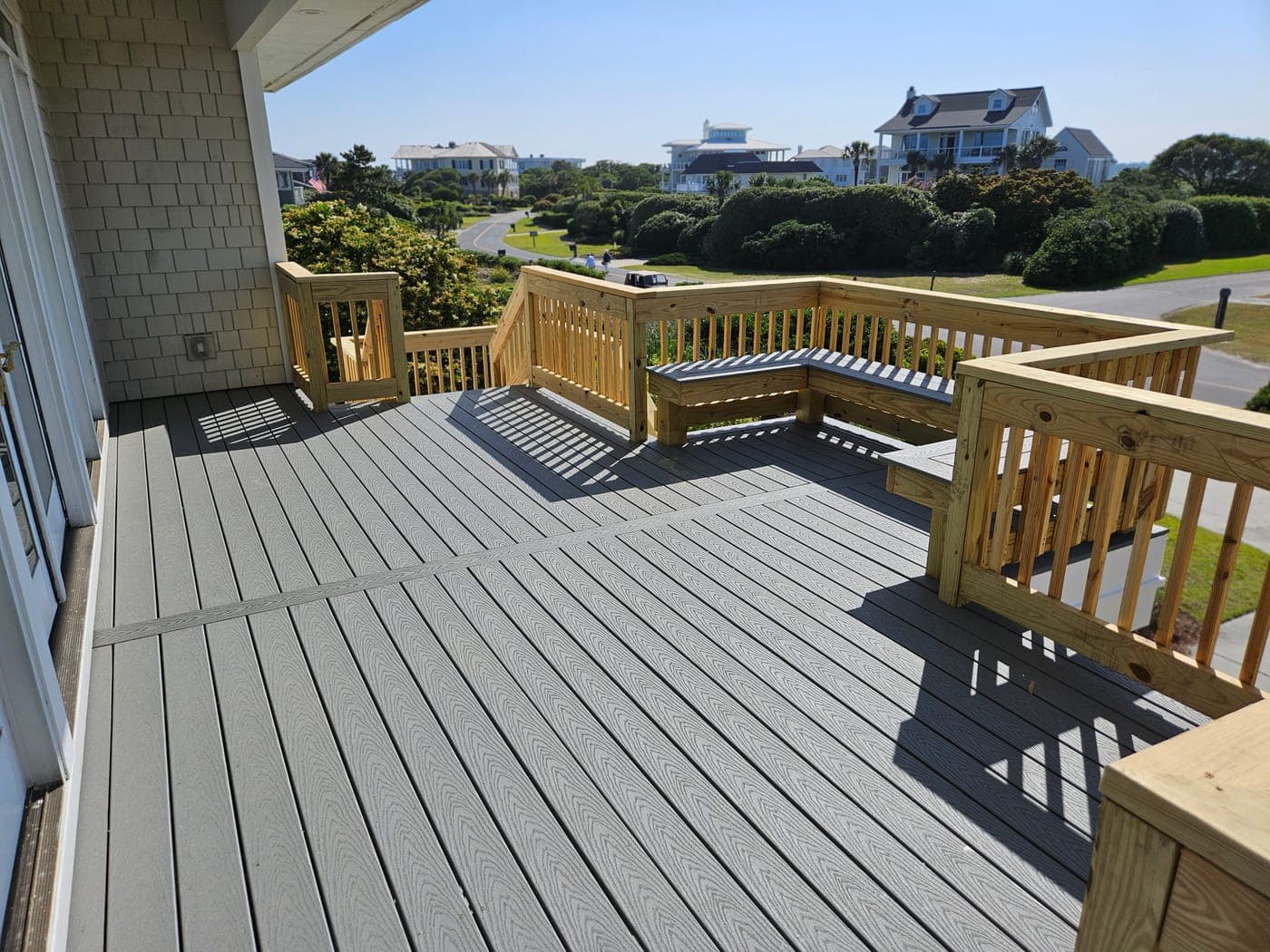
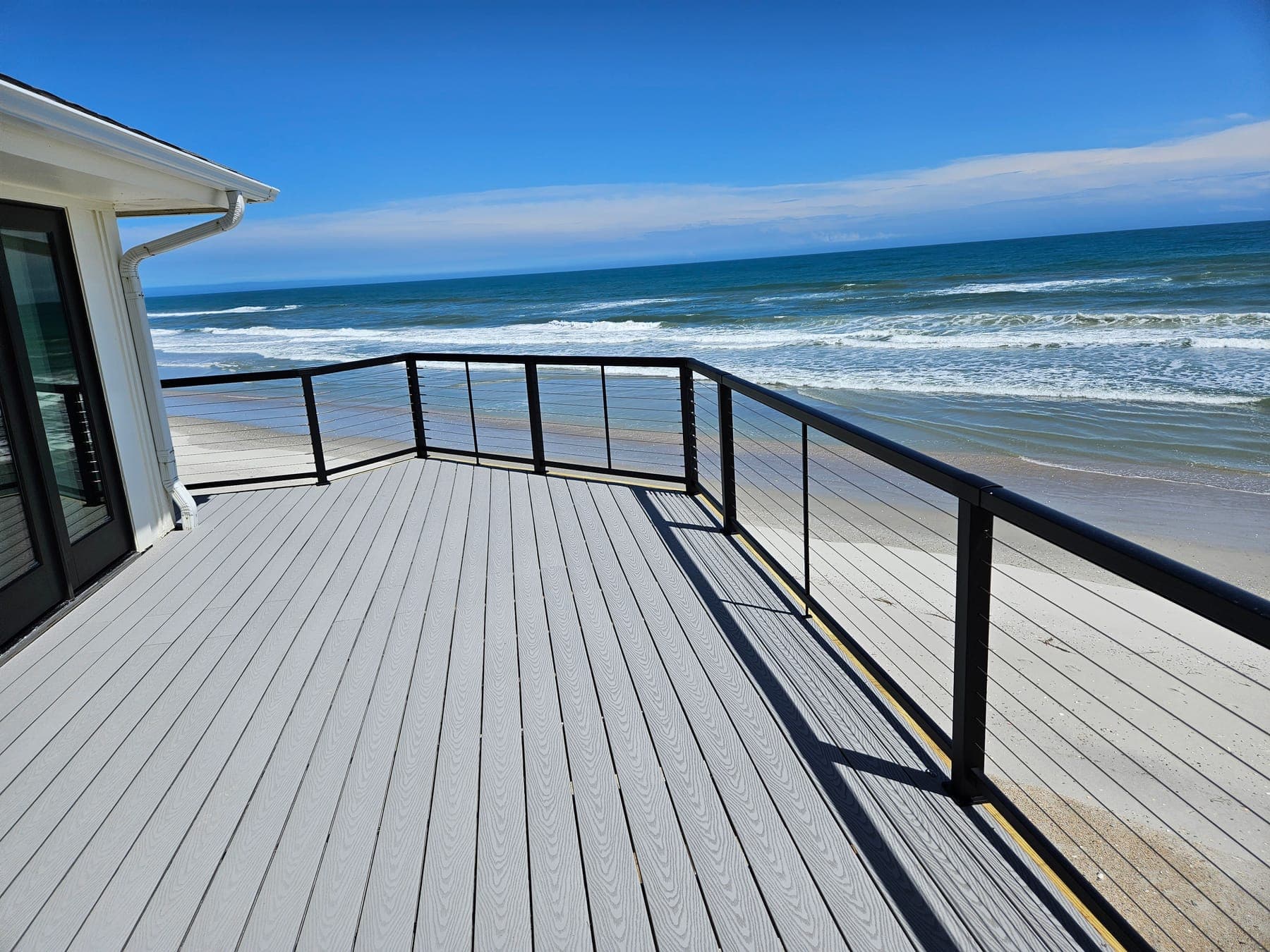
Wood or composite deck. The natural choice when the pool is above-ground or the yard slopes, and the standard answer for elevating a lounge zone to porch height on beach-town lots. For in-ground pools, a deck section works beautifully as a raised lounge or bar area beside a concrete or paver apron. Around splash zones, composite beats wood; pool water, whether chlorine or salt-system, is hard on wood finishes, and composite shrugs it off with a rinse. Use stainless fasteners near a saltwater pool for the same reason we use them near the ocean.
A note on salt systems. Saltwater pools are gentle on swimmers and mildly corrosive to everything else. Salt splash accelerates wear on ordinary concrete surfaces, rusts cheap fasteners and furniture feet, and spots some natural stones. None of this is disqualifying; it just means sealing concrete, choosing hardware wisely, and rinsing surfaces occasionally, habits coastal homeowners have anyway.
The fence is not optional
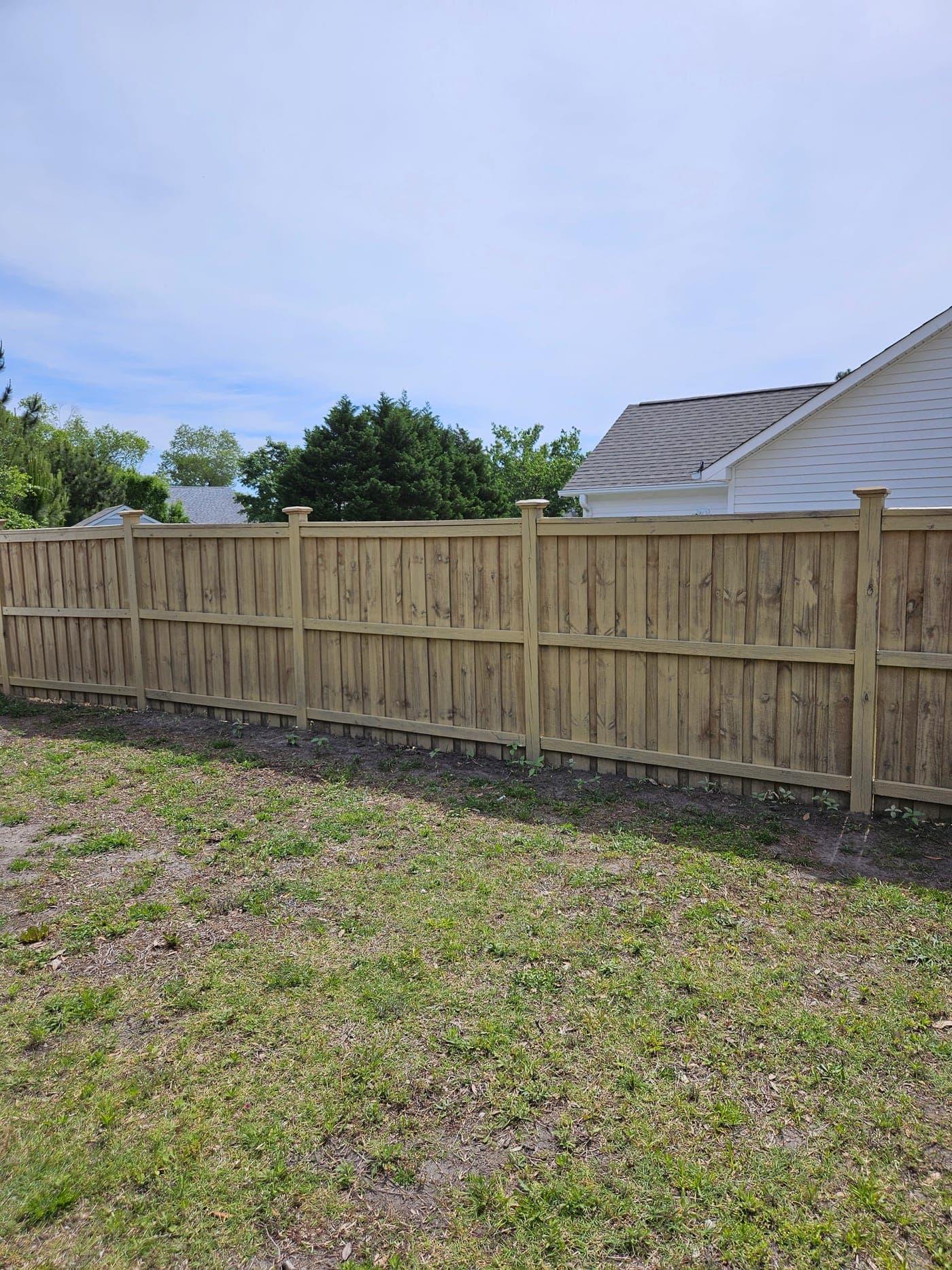
North Carolina requires barriers around residential swimming pools, and local rules and insurance carriers enforce the details: minimum barrier heights, self-closing and self-latching gates, and climb-resistant design. Beyond compliance, this is the one fence category where we tell clients not to value-engineer; it's a drowning-prevention system that happens to look like a fence. Powder-coated aluminum is the coastal standard here, corrosion-resistant, open enough to keep sightlines to the water, and available in code-compliant heights with the right gate hardware. Typical fence projects run $1,500 to $6,500, and pool enclosures generally land mid-range and up because of gate hardware and height requirements.
Ideas that earn their cost
A few upgrades we see clients consistently glad they made: a covered or pergola-shaded corner of the surround, because shade next to a pool gets used more than any other square footage in the yard; an outdoor shower on the house wall for rinsing salt, sand, and sunscreen before anyone goes inside, which beach-town households consider plumbing, not luxury; low-voltage lighting on paths and steps for evening swims; and a deck-level storage bench that swallows the floats and noodles that otherwise colonize the whole yard.
Sequencing matters
If the pool isn't in the ground yet, bring the surround contractor into the conversation early. Grading, drainage away from the house, equipment-pad screening, and fence lines are all cheaper to plan than to retrofit, and pool builders focus on the pool, not the yard around it.
Whether you're surrounding a new pool or upgrading the cracked apron around an old one, we'll give you a free written estimate with options priced against each other. Start at our estimate page and tell us what your summer is supposed to look like.
Pricing a project?
Get an instant range
Pick your project type and see a real price range in seconds — based on jobs we’ve actually completed around Wilmington.
Common questions
What is the best surface around a pool in coastal North Carolina?
Pavers are our most frequent recommendation: they handle sandy-soil movement without cracking, stay reasonably cool in lighter colors, drain well, and repair invisibly. Textured concrete is the budget pick, and composite decking works well for raised lounge areas and above-ground pools.
Does a saltwater pool damage the deck around it?
Salt systems are mildly corrosive to surrounding materials over time. Sealed concrete, pavers, and composite handle splash fine with occasional rinsing, but wood finishes wear faster and cheap fasteners rust, so we spec stainless hardware near saltwater pools.
Do I need a fence around my pool in North Carolina?
Yes. Residential pools require barriers with self-closing, self-latching gates under North Carolina requirements, and insurers enforce their own standards on top. Powder-coated aluminum is the most popular coastal choice because it meets code and resists salt-air corrosion.