March 24, 2026
Pergola vs. Covered Porch: What Works on the NC Coast
By Coastal Concepts Construction · 3 min read
An honest comparison of pergolas and covered porches for coastal North Carolina backyards, including shade, rain, wind, and cost realities.
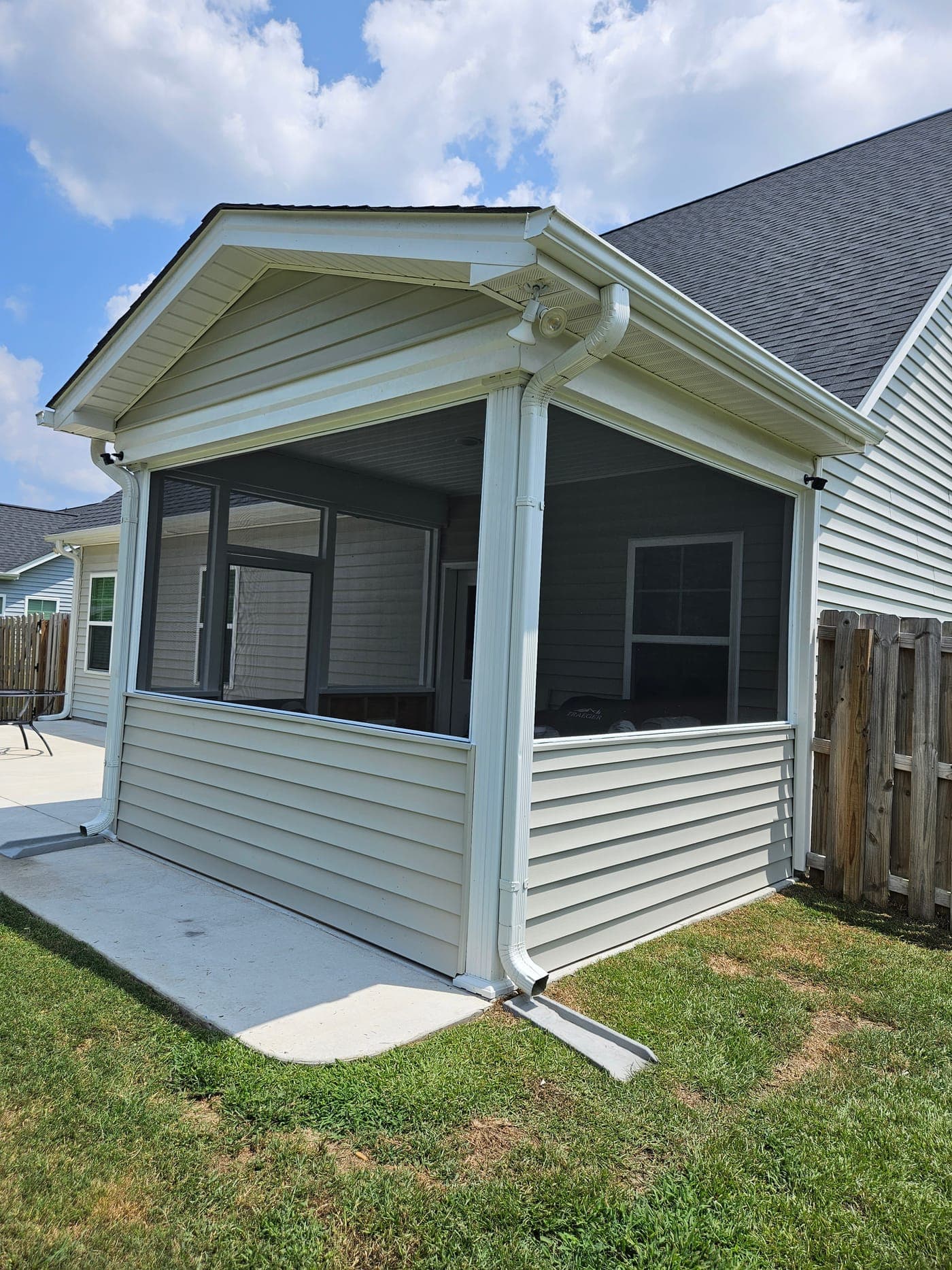
Somewhere around the third 95-degree week of a Wilmington summer, every deck owner starts pricing shade. The two structures people ask us about are pergolas and covered porches, and they are very different animals in cost, function, and how they handle coastal weather. Here's the plain comparison.
What each one gives you
A pergola is an open-roofed frame: posts, beams, and spaced rafters or slats overhead. It filters sun, defines an outdoor room, and gives vines and string lights somewhere to live. It does not stop rain, and standard slat spacing only cuts direct sun by roughly a third to a half depending on design and time of day.
A covered porch is a real roof, framed, sheathed, shingled or metal-roofed, usually tied into the house. It stops rain, blocks sun completely, keeps the furniture dry year-round, and creates space you'll use in an August downpour with the thunder rolling in off the water, which is honestly some of the best porch time this coast offers.
The coastal weather test
Sun. Our summer sun is strong enough that partial shade often disappoints. Under a bare pergola at 3 p.m. in July, you're still hot. Pergolas earn their keep in morning and evening hours, or once a vine fills in, or with a fixed or retractable canopy added.
Rain. The coast gets sudden, heavy thunderstorms all summer. A pergola offers no protection; a covered porch turns those storms into scenery.
Wind. This is the one people skip. We're in a high-wind region, and anything you build overhead has to be engineered to stay put in a blow. A covered porch roof gets designed and permitted with uplift connections like the rest of the house. A pergola's open top actually sheds wind well, which is a point in its favor, but only if the posts are properly footed and the connections use real structural hardware. The pre-fab kits with hardware-store brackets that go up in a weekend are the ones we find leaning after a tropical storm.
Salt air. Wood pergolas weather fast because they're all edges and end grain in full exposure. Fiberglass and aluminum pergola systems handle the coast better and need less of you. For porches, the roof materials are the same proven ones on your house.
Cost, honestly
A pergola is the cheaper path, sometimes dramatically so, with simple wood structures at the low end and large fiberglass or motorized-louver systems climbing steeply from there.
A covered porch costs more because it is more: roof framing, roofing, often electrical for fans and lights, and engineering to tie into the house. As a reference point, screened versions of the porches we build run $2,500 to $15,000 depending on size and roof complexity, and an open covered porch prices in similar territory since the roof, not the screen, is most of the cost. Tying a new roof into an existing house cleanly, matching pitch, flashing it right, is where experience shows.
Permits, briefly
Covered porches are permitted structures here, inspected for footings, framing, and those wind connections. Substantial pergolas are structures too, and attached ones in particular typically need a permit; the footing and hardware review is exactly what keeps them standing through storm season, so we consider that a feature.
How we help clients choose
Ask yourself two questions. When do you actually sit outside? If the answer is mornings and evenings, a pergola may be all the shade you need. And what should happen when it rains? If the answer is "we stay out there," you want a roof.
Budget-wise, a fair rule: pergola money buys atmosphere and partial shade; porch money buys a room. Both are legitimate, and on bigger projects we sometimes build both, a covered porch at the house and a pergola over a grill zone or spa at the deck's far end.
If you're weighing shade options for a deck or backyard anywhere in the greater Wilmington area, request a free written estimate at our estimate page. We'll look at your sun angles, your wind exposure, and your budget, and give you real numbers for both paths.
Pricing a project?
Get an instant range
Pick your project type and see a real price range in seconds — based on jobs we’ve actually completed around Wilmington.
Common questions
Does a pergola block rain?
No. A standard pergola has an open slatted top that filters sun but offers no rain protection. If you want to stay outside through summer thunderstorms, you want a covered porch or a pergola fitted with a solid or louvered canopy.
Will a pergola survive coastal storms?
A properly built one can. The open top sheds wind well, but the posts need real footings and structural hardware rated for our high-wind region. Lightweight kit pergolas with minimal anchoring are the ones that fail in tropical weather.
Is a covered porch worth the extra cost over a pergola?
If you want shade you can count on at 3 p.m. in July, dry furniture, and usable space in the rain, yes. If you mainly use the yard mornings and evenings and want structure and ambiance at a lower cost, a pergola covers that. We price both options on request.