May 26, 2026
Hurricane Season Home Prep: A Coastal NC Checklist
By Coastal Concepts Construction · 3 min read
Hurricane season runs June 1 to November 30, and Wilmington sits square in its path. Here's the home preparation checklist we run before every season — structural checks, documentation, and the fixes to make now.
Atlantic hurricane season opens June 1 and runs through November 30, and if you live around Wilmington you don't need us to explain why that matters. This coast has taken direct hits and near-misses in living memory — Florence in 2018 sat on us for days, and even weaker systems like Debby in 2024 showed how much damage rain and wind can do without a major landfall. The week a storm is named, supplies vanish and every contractor's phone melts. The preparation that actually protects your house happens now, in late May, while the weather is fine.
Here's the checklist we run — on our own homes and for our clients.
Fix the Weak Points While You Still Can
Storms don't create most damage from scratch; they find what was already marginal and finish it. Walk your property looking for what a 70-mph gust would exploit:
- Roof: lifted or missing shingles, loose flashing, aging sealant at penetrations. A shingle that's lifted in May is a hole in September.
- Trees: limbs over the roofline, dead trees within falling distance of the house or power drop. Tree work is cheap in May and impossible to schedule in the 72 hours before landfall.
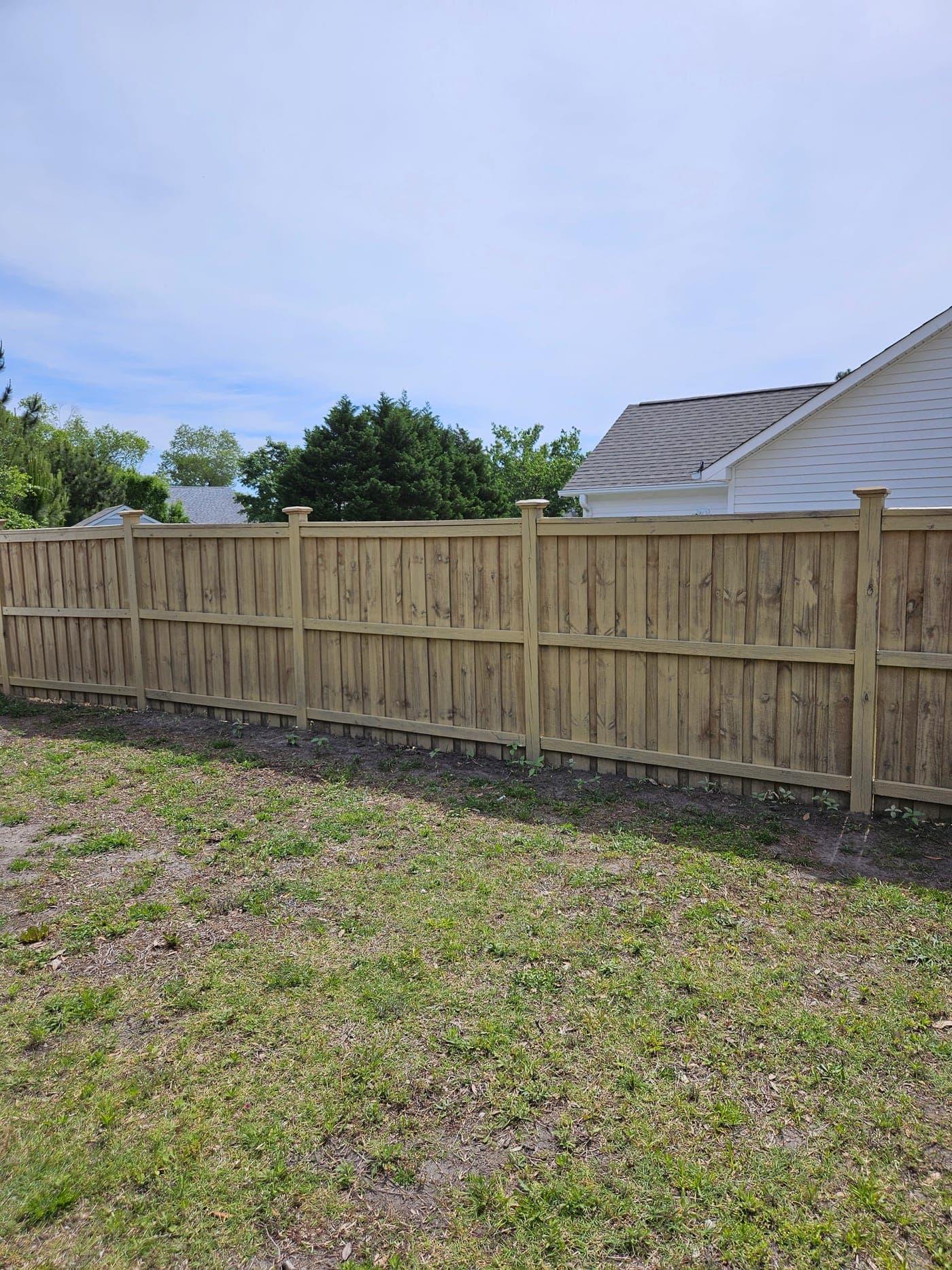
- Fences and gates: wobbly posts and sagging gates become airborne debris and torn-out sections. If you have an automatic gate, service it now — test the battery backup and learn the manual release, because storm outages are exactly when you'll need both.
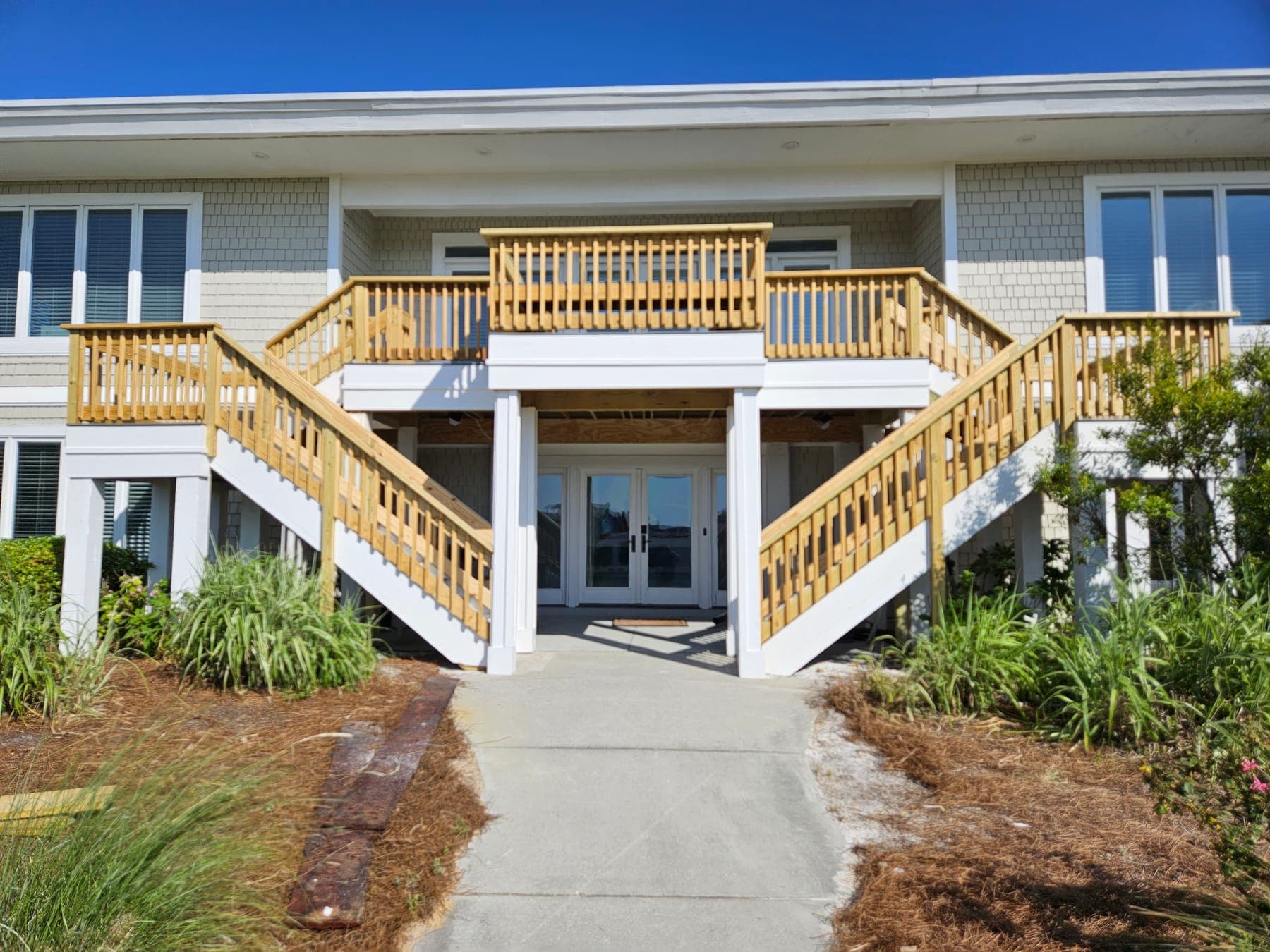
- Decks, railings, shutters: tighten and re-fasten anything loose. Loose is a pre-storm condition; gone is the post-storm version.
- Gutters and drainage: clean gutters and confirm downspouts move water away from the house. Many storms here do their worst damage with rain, not wind — Florence proved that emphatically.
Know Your Openings
Garage doors and large windows are the openings that matter most. When wind breaches a garage door, pressure inside the house rises sharply and roofs fail from the inside — it's a classic failure sequence. Check that your garage door is in good condition and its track hardware is tight; reinforcement kits exist for older doors. Decide now how you'll protect windows — rated shutters or properly sized plywood cut and labeled per opening in May, not sourced from an empty store in a landfall week.
Document Everything Before You Need To
This is the step people skip and regret most. Walk the property with your phone and film every elevation of the exterior, every room, the roof from the ground, the fence line, the gate, the outbuildings. Store it in the cloud, not just on the phone. After a storm, an insurance claim with clear before-and-after evidence settles faster and more fully than one without. While you're at it, locate your policy, understand your wind/hail deductible (often separate and percentage-based on this coast), and know what your flood situation is — standard homeowners policies don't cover flood.
The House Systems Rundown
- Know where and how to shut off water, power, and gas
- Test any generator now and store fuel safely; never run one indoors or near openings
- Charge battery backups, including your gate's
- Photograph model/serial plates on HVAC and major appliances — it speeds claims for storm-killed equipment
When a Storm Is Named
If you've done the above, the named-storm week is simple: bring in everything loose from the yard (furniture, planters, trash cans — all of it becomes debris), stage your window protection, top off vehicles, and follow local emergency management guidance on evacuation. Your county emergency management office — New Hanover, Brunswick, or Pender — is the authority on evacuation zones and shelters, not social media.
The Contractor's Version of "Good Luck"
Every year we repair damage that a May inspection would have prevented for a tenth of the cost. If you'd like a professional walk-through of your home's storm weak points — roof, openings, drainage, trees, gate and all — we do pre-season inspections across the Wilmington area. Request one at /estimate and we'll put the findings and the fixes in a free written estimate. June 1 comes fast.
Pricing a project?
Get an instant range
Pick your project type and see a real price range in seconds — based on jobs we’ve actually completed around Wilmington.
Common questions
When should hurricane prep on a home be finished?
By June 1, when Atlantic hurricane season opens — though the historical peak for this coast runs August through September. The real deadline is practical: tree crews, roofers, and gate services book out fast once the season's first storm threatens, so May is the month to schedule repairs.
What's the most overlooked hurricane preparation item?
Pre-storm documentation. A phone video of every exterior elevation and every room, stored in the cloud, dramatically strengthens and speeds an insurance claim. Second most overlooked: knowing your wind/hail deductible and whether you have flood coverage — standard homeowners policies don't include flood.
Why do garage doors matter so much in a hurricane?
They're typically the largest, weakest opening in the building envelope. When wind breaches a garage door, internal pressure spikes and can fail the roof from inside — a well-documented failure sequence. Keeping the door and track hardware sound, or adding a reinforcement kit to an older door, protects far more than the garage.