May 28, 2026
Hurricane-Proofing Your Deck: A Coastal NC Checklist
By Coastal Concepts Construction · 4 min read
How coastal North Carolina decks fail in hurricanes and the specific connections, hardware, and pre-season checks that keep them attached.
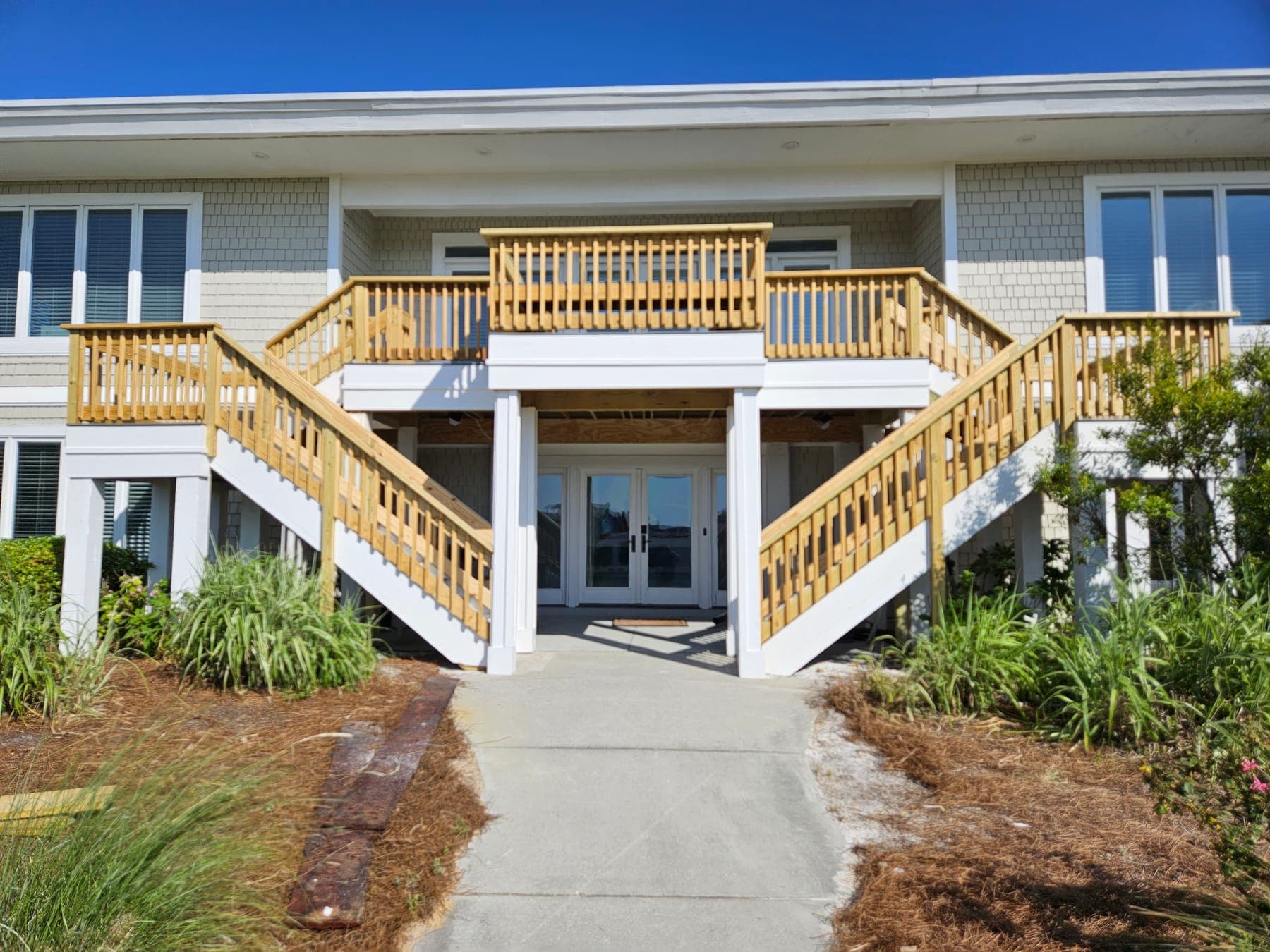
Hurricane season starts June 1, and every year about now we start getting the same smart question from homeowners: is my deck going to be here after a storm? Having repaired and rebuilt decks after Florence and every named system since, we can tell you decks don't fail randomly. They fail at the same few points every time. Here's where, and what to do about it before the first cone shows up on the forecast.
How decks actually fail in storms
They peel off the house. The ledger connection, where the deck attaches to the structure, is failure point number one. A ledger fastened with nails instead of bolts, or rotted from years of missing flashing, lets the deck separate and take siding with it.
They lift. Hurricane wind doesn't just push; it gets under an raised deck and lifts. Framing that's merely resting on posts, toe-nailed connections, and posts sitting on (not anchored to) footings all come apart from the bottom up. This is why our region's building code treats uplift connections seriously; southeastern North Carolina sits in a high-wind zone, roughly 140 mph design speeds around Wilmington and higher east toward the beaches.
Their hardware was already gone. Salt air corrodes connectors and fasteners years ahead of the wood around them. A joist hanger that's rusted to lace holds fine on a calm day and fails in the first serious gusts. Storms don't destroy these decks so much as reveal them.
They get hit. Loose deck furniture, umbrellas, and grills become projectiles that break windows, yours and your neighbors'. In a wind-borne debris region like ours, this is half the damage story.
The pre-season checklist
Work through this in May or June, before the tropics wake up:
- Probe the ledger. Screwdriver test along the board where deck meets house, and look for flashing above it. Soft wood or missing flashing is a stop-and-fix item, not a watch item.
- Inspect every visible connector. Joist hangers, post caps, post bases. Surface rust is a warning; flaking, delaminating steel is a failure in progress. Replacement with hot-dip galvanized or stainless hardware is cheap relative to what it prevents.
- Check post bases. Posts should be positively anchored to footings with hardware, not buried in dirt or resting on blocks. Wiggle them; nothing should move.
- Tighten and check fasteners. Popped nails and backing screws mean the frame is working loose. Rusted fasteners streaking the wood are telling you their condition inside the joint.
- Shake the railing. Guards take wind load too, and a loose railing in a storm becomes debris with a head start.
- Plan the furniture. Know where every movable thing goes when a watch is issued: inside, under the house, or strapped. Do the walk-through mentally now, not at midnight before landfall.
If items 1 through 3 turn up problems, that's professional-repair territory. Typical deck repairs run $800 to $6,500, and pre-season hardware and ledger work sits mostly at the lower end of that. It's the best storm-prep money a deck owner can spend.
If you're building new: buy the wind resistance up front
A new deck built to current code in this region already includes most of what "hurricane-proofing" means: bolted and flashed ledger, uplift-rated connectors at every joint, posts anchored to proper footings, and corrosion-resistant hardware specified for coastal exposure. That's a core reason permits and inspections are worth wanting; the footing and framing inspections exist precisely to verify the connections a storm will test. We build decks from $4,000 to $25,000, and the wind hardware is never where we or you should trim the budget.
After the storm
If a storm does work your deck over, walk it before you trust it: new bounce or sway, separation at the house, leaning posts, or racked railings mean keep everyone off until it's inspected. Take photos for insurance before touching anything; a permitted deck with documentation makes that claim conversation far easier.
We inspect, repair, and rebuild storm-tested decks throughout New Hanover, Pender, and Brunswick counties. If you'd like eyes on yours before the season gets serious, request a free written estimate at our estimate page. June you will thank May you.
Pricing a project?
Get an instant range
Pick your project type and see a real price range in seconds — based on jobs we’ve actually completed around Wilmington.
Common questions
What part of a deck fails first in a hurricane?
The ledger connection to the house and the uplift connections at posts and joists. Decks peel away from the structure or lift from underneath, and corroded coastal hardware accelerates both. Those connection points are where inspection and repair money should go.
How much wind can a code-built deck handle?
Decks built to the current North Carolina Residential Code in our region are designed for the local high-wind zone, roughly 140 mph design speeds around Wilmington and higher toward the beaches, with uplift-rated connections throughout. Age and corrosion are what erode that capacity over time.
What should I do with my deck before a hurricane?
Clear everything movable: furniture, umbrellas, grills, planters, and decor all become projectiles. Store them inside or below, strap what can't move, and do a quick check for loose railings or boards that the wind could finish removing.