February 17, 2026
Fence Materials That Survive Salt Air on the NC Coast
By Coastal Concepts Construction · 3 min read
Wood, vinyl, aluminum, and chain link compared for coastal North Carolina yards, by a contractor who has replaced fences that lost to the salt.
Drive any street in Kure Beach or Surf City and you can read the history of fence materials in the yards: gray, leaning wood pickets; chalky vinyl; rusted chain link; and here and there an aluminum fence quietly outlasting them all. We install and replace fences across New Hanover, Pender, and Brunswick counties, and salt air sorts the materials fast. Here's the field report.
What kills fences on the coast
Three things, in order: water, wind, and salt. Humidity and rain rot wood and rust ferrous metal. Wind works every post and fastener loose a little at a time, then a tropical system finishes the job on anything marginal. Salt accelerates corrosion on every piece of metal in the fence, and every fence has metal in it somewhere, even "wood" fences, which live or die by their nails, screws, and gate hardware.
So the material question is really three questions: how does the infill weather, how do the posts hold, and what's the hardware made of?
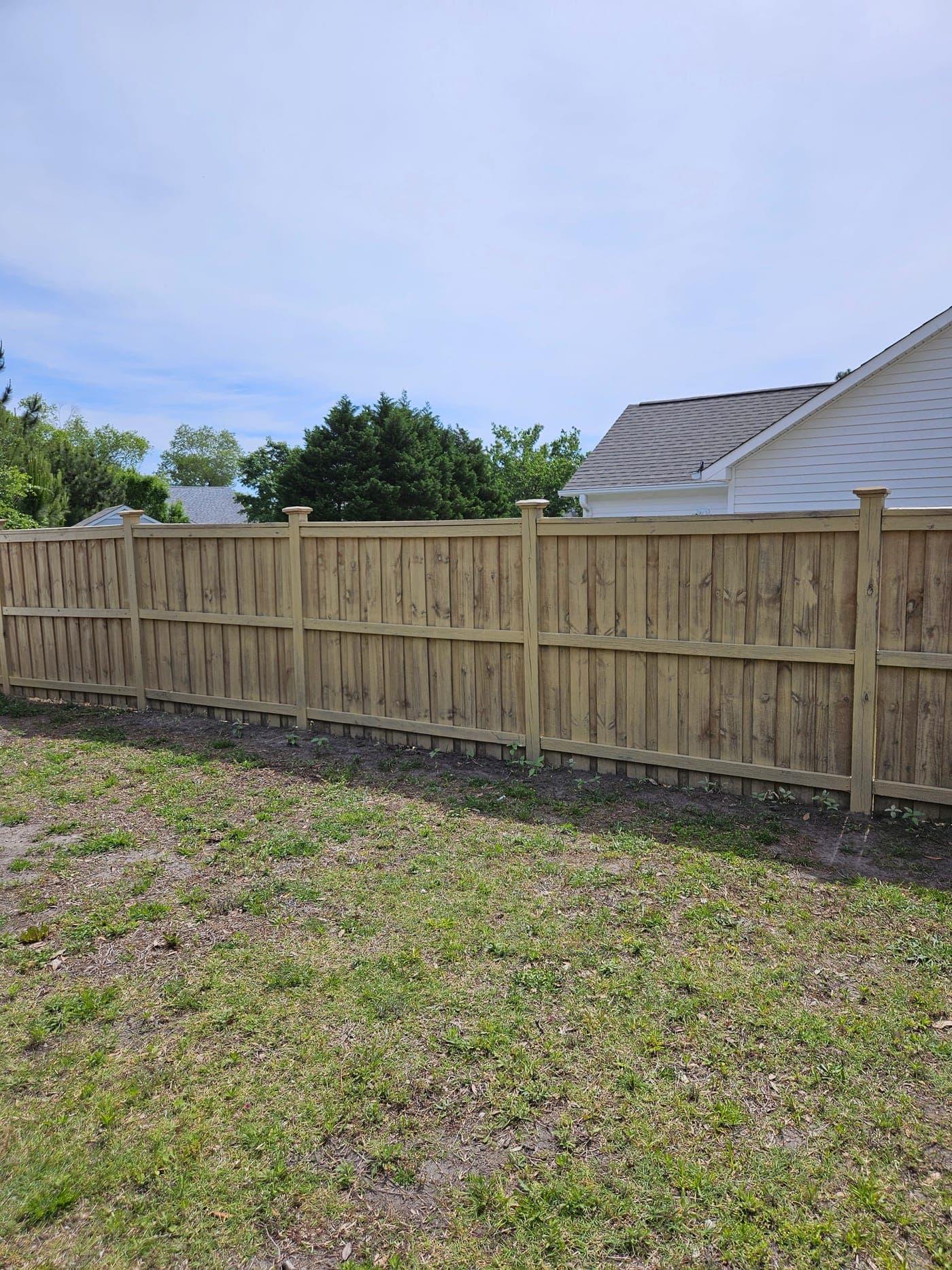
Pressure-treated wood
Still the most popular fence we build, because it's affordable and looks right in most neighborhoods. Typical fence projects, wood included, run $1,500 to $6,500 depending on length, height, and gates.
Coastal reality: expect graying within a year or two unless you stain it, and expect the fence to move before it rots; wind loosens posts, pickets pop as nails back out. The upgrades that matter are ring-shank or screw fastening in stainless or hot-dip galvanized, solid post setting, and stainless gate hardware, because the gate is always the first thing to sag and rust. Well-built, a PT fence here gives you 12 to 20 years, less oceanfront.
Vinyl
No rot, no staining, no insects, and salt air doesn't touch the panels. Vinyl privacy fence is a strong coastal choice, with two honest caveats. First, wind: a solid 6-foot vinyl panel is a sail, so post depth, post spacing, and the quality of the rail-to-post connection decide whether it survives a blow. Cheap thin-wall vinyl with shallow posts is the fence we most often haul away after a storm. Heavier-wall product, properly set, does fine. Second, sun: quality vinyl holds its color for decades; bargain vinyl chalks and yellows.
Aluminum
For open-picket fencing, powder-coated aluminum is the coastal champion. It doesn't rust the way steel or wrought iron does, needs nothing but an occasional rinse, and handles pool enclosures and front-yard fencing gracefully. It offers no privacy, and it costs more up front than wood, but on lifespan-per-dollar near salt water it's hard to beat. Where clients want privacy AND longevity, we often pair aluminum in front with vinyl privacy runs in back.
Chain link
The budget workhorse still has a place, and modern vinyl-coated chain link resists coastal corrosion far better than the bare galvanized fabric of decades past. Black vinyl-coated chain link nearly disappears against shrubs, holds up to salt air respectably, and costs the least per foot of anything here. For big rural-ish lots in Rocky Point or Bolivia where the mission is keeping dogs in, it's an honest answer.
What we'd skip near the coast
Untreated or bargain-grade wood, powder-coated steel (scratches become rust streaks), and ornamental iron unless you enjoy annual painting. Composite fencing exists and weathers well, but the cost usually sends those clients to vinyl instead.
Hardware, again, always
Whatever the panels are made of, specify the metal: stainless or hot-dip galvanized fasteners, stainless gate hinges and latches near salt water. A $6,000 fence with $40 hardware is a $40 fence.
Permits and rules, briefly
Standard-height residential fences generally don't need a building permit in our area, but zoning height limits, corner-lot visibility rules, HOA covenants, and coastal (CAMA) rules near the water can all apply; we cover that in a separate post and check it on every job.
If your fence is losing its fight with the salt, or you're fencing a new yard, request a free written estimate at our estimate page. We'll walk the line with you and quote materials that fit the exposure and the budget.
Pricing a project?
Get an instant range
Pick your project type and see a real price range in seconds — based on jobs we’ve actually completed around Wilmington.
Common questions
What fence lasts longest in salt air?
Powder-coated aluminum for open fencing and heavy-wall vinyl for privacy runs are the longevity leaders near salt water. Both need only occasional rinsing, while wood and steel-based fences require ongoing maintenance to keep ahead of the coastal weather.
How much does a fence cost in the Wilmington area?
Most residential fence projects we build run $1,500 to $6,500 depending on length, height, material, and gate count. Chain link sits at the low end, wood in the middle, and vinyl and aluminum toward the top.
How long does a wood fence last on the North Carolina coast?
A well-built pressure-treated fence typically gives 12 to 20 years here, less with direct ocean exposure. Quality fasteners, solid post setting, and periodic staining are what push a wood fence toward the long end of that range.