April 7, 2026
Deck Stain and Seal Schedule for Coastal NC Humidity
By Coastal Concepts Construction · 4 min read
How often to stain and seal a wood deck in coastal North Carolina, when in the year to do it, and the prep steps that make the finish last.
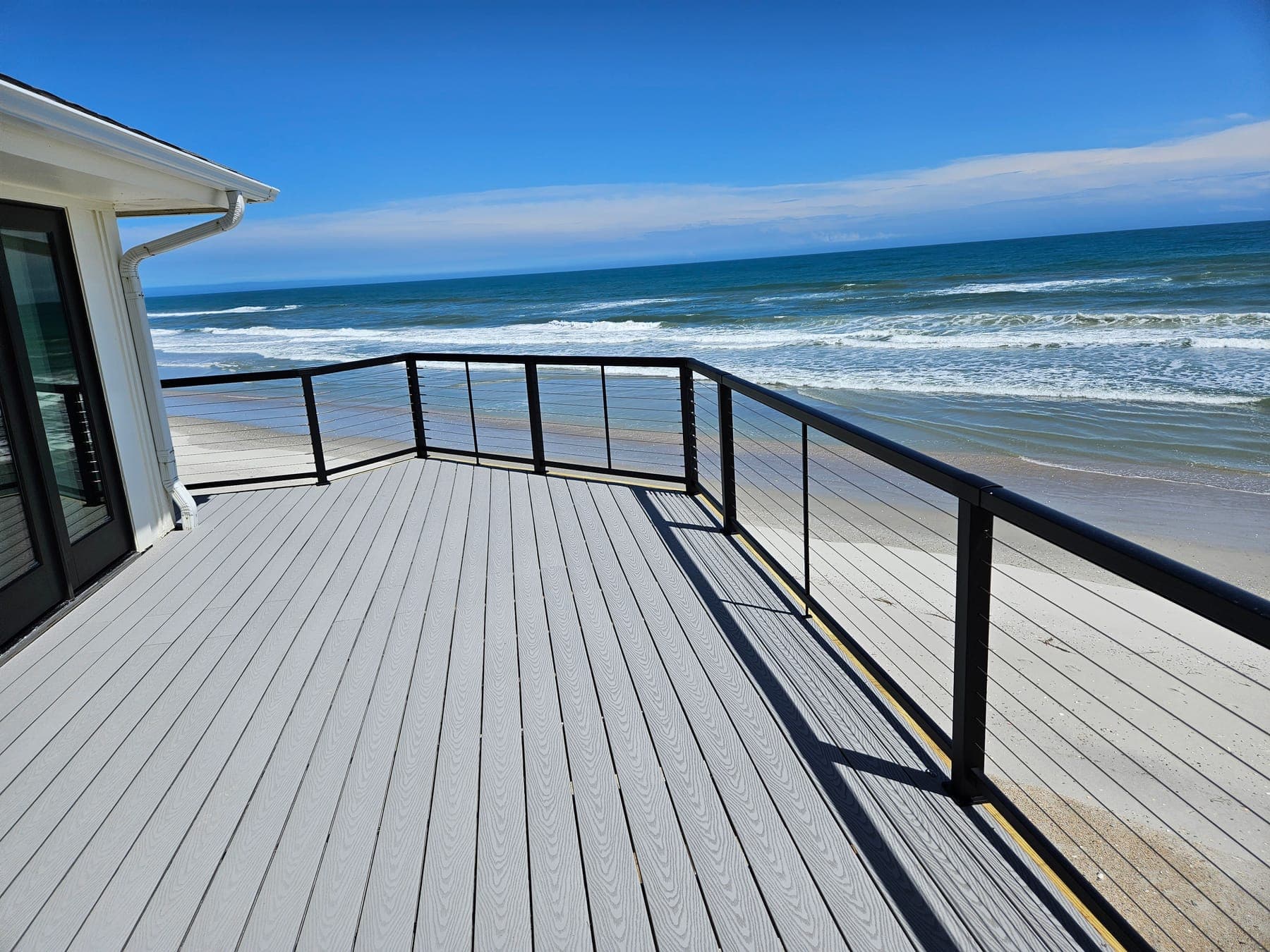
Coastal humidity is patient. It doesn't wreck a wood deck in a season; it wins over five years of skipped maintenance, one gray, cupped board at a time. The counter is a finish schedule you actually keep. Here's the schedule we give clients when we hand over a new pressure-treated deck, and the reasoning behind it.
The short version
- New pressure-treated deck: let it dry, then apply the first coat, typically a few months after the build depending on the lumber and the season.
- Water-repellent clear sealer: reapply every 1 to 2 years.
- Semi-transparent stain: reapply every 2 to 3 years.
- Oceanfront or full-sun decks: use the short end of every interval.
- Best months to do the work here: April, May, October, and early November.
Why the coast compresses the schedule
Inland decks fight sun and rain. Ours fight sun, rain, salt film, and air that spends half the year above 70 percent humidity. Moisture drives the swell-and-shrink cycle that opens checks in the wood, and the humidity feeds mildew that shades the surface gray-black, especially on shaded north sides. Salt crystals left on the surface hold moisture against the finish. That's why a sealer that lasts three years in the Piedmont gives you closer to eighteen months at Wrightsville Beach.
The water test: your deck will tell you
Forget the calendar for a second. Pour a cup of water on the deck's sunniest board. If it beads, the finish is working. If it soaks in and darkens the wood within a couple of minutes, the deck is drinking, and it's time. Run this test each spring and the schedule takes care of itself.
New deck? Don't stain it too early
The most common finish mistake we see is staining fresh pressure-treated lumber immediately. New PT boards come saturated with treatment solution, and finish applied over wet lumber won't penetrate; it sits on top and peels within the year. Depending on the lumber and the weather, drying takes weeks to a few months. Use the water test: when the boards absorb water instead of beading it untreated, they'll absorb stain too. A winter- or early-spring-built deck usually hits that window in late spring, which is perfect timing here.
Timing the application window
Stain and sealer want a dry deck, moderate temperatures, and no rain for a day or two after application. On this coast, that rules out more of the calendar than you'd think. July and August afternoons bring pop-up thunderstorms and humidity that slows curing; pollen season in early spring will texture a wet finish with a yellow dusting. The reliable windows are mid-to-late spring after the pollen drops, and the long dry spells of October and early November. Fall might be the best-kept secret; the deck you seal in October rides out winter protected.
Prep is most of the job
Finish over dirt and mildew fails fast. The sequence that works:
- Clean. Deck cleaner or a mild bleach solution to kill mildew, scrub, rinse well. Go easy with pressure washers; high pressure furs the wood grain and drives water deep.
- Dry. Two or three rain-free days before coating.
- Sand rough spots. Splinters and raised grain, especially on handrails.
- Coat thin. One thin, worked-in coat beats a thick glossy one that peels. On horizontal boards, less is more.
What about composite?
Composite decking skips this entire post, which is most of its sales pitch. It still wants a soap-and-water wash once or twice a year to clear salt film, pollen, and mildew, but there's no sealing cycle. If you're reading this schedule with dread, that's useful information for your next deck.
When the finish schedule stops being enough
If boards stay spongy after drying, fasteners are rusting through, or the framing underneath shows rot, you're past maintenance and into repair, which typically runs $800 to $6,500 depending on scope. Catching it at the staining stage is exactly why the schedule matters.
We build, repair, and restore decks across the greater Wilmington area, and every estimate comes with straight answers about what your deck needs and what it doesn't. Request a free written estimate at our estimate page and we'll take a look before the humidity gets another season's head start.
Pricing a project?
Get an instant range
Pick your project type and see a real price range in seconds — based on jobs we’ve actually completed around Wilmington.
Common questions
How often should I seal a deck in coastal North Carolina?
Every 1 to 2 years for clear water-repellent sealers and every 2 to 3 years for semi-transparent stains, using the shorter interval for oceanfront and full-sun decks. The bead test, water soaking in instead of beading, tells you when it's due.
When can I stain a brand-new pressure-treated deck?
After the lumber dries enough to absorb water, which typically takes weeks to a few months depending on the season. Staining too early is the most common finish failure we see, because the coating can't penetrate wet treated wood and peels within a year.
What time of year is best to stain a deck in Wilmington?
Mid-to-late spring after pollen season, or October through early November. You want a dry deck, moderate temperatures, and a rain-free window, which summer's pop-up thunderstorms make hard to find.