October 28, 2025
Deck Railing Options That Hold Up in Salt Air
By Coastal Concepts Construction · 3 min read
Wood, aluminum, composite, cable, and glass deck railing compared by a coastal NC contractor who has replaced plenty of each.
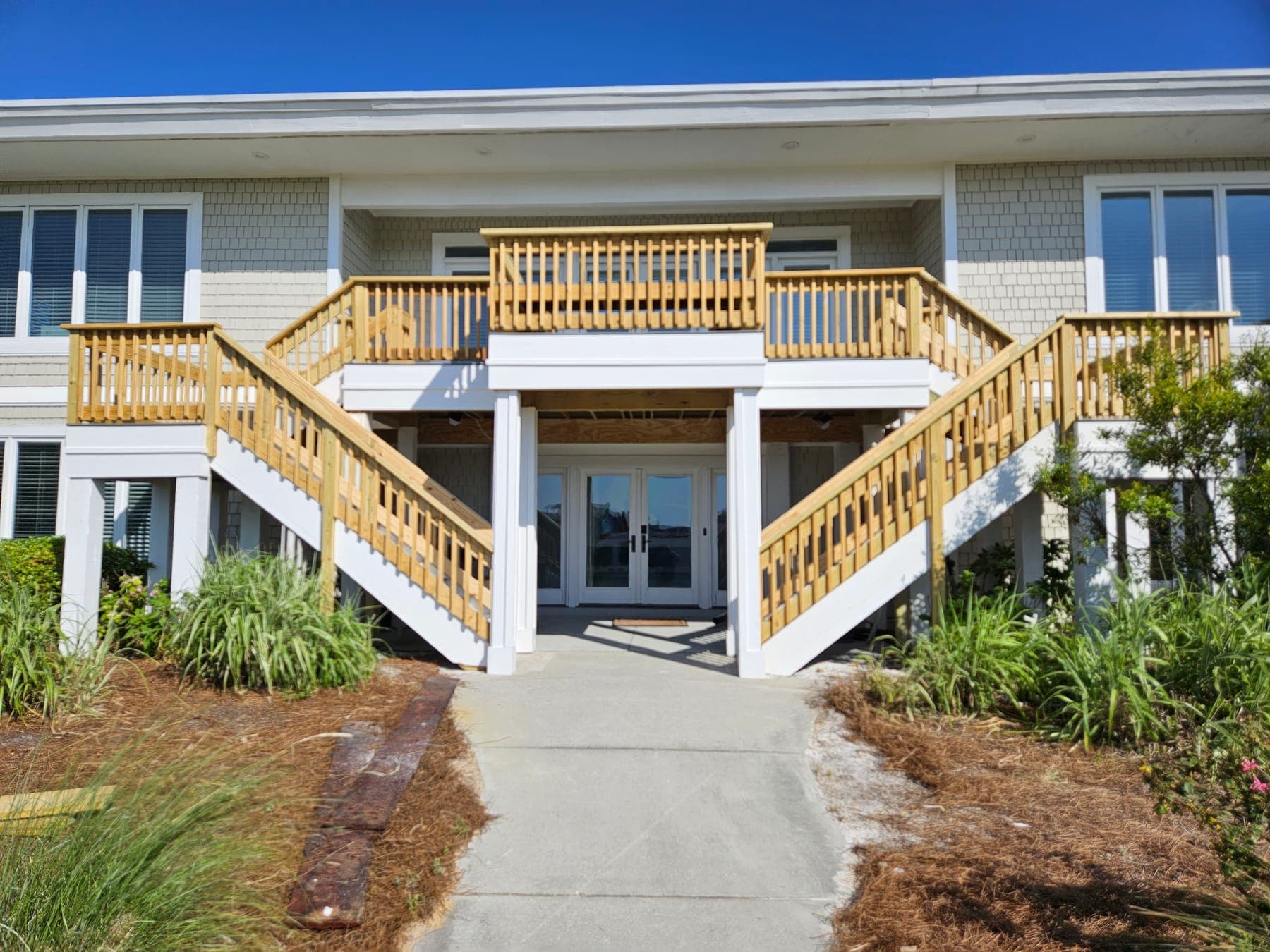
Railing is the part of the deck you touch every day, the part building code cares most about, and the part salt air attacks first. We've installed and torn out every railing type there is between Topsail Island and the Brunswick beaches. Here's what we've learned about each.
First, the code baseline
Under the North Carolina Residential Code, any deck surface more than 30 inches above grade needs a guard at least 36 inches high, with openings tight enough that a 4-inch sphere can't pass through. Stairs have their own handrail requirements. Every option below can meet code when installed correctly; the differences are cost, maintenance, view, and lifespan in salt air.
Pressure-treated wood
The default, and the cheapest. A wood 2x4 top rail with pickets does the job for the least money up front.
In coastal humidity, though, railing is the first part of a wood deck to go. It's built from smaller-dimension lumber, it has end grain exposed everywhere, and people lean, sit, and hang towels on it. Expect to sand and refinish it more often than the deck boards, and expect wobbly pickets within a decade. On oceanfront homes we consider wood railing a wear item.
Best for: budget builds, shaded lots, and folks who genuinely like the look and don't mind the upkeep.
Aluminum
Powder-coated aluminum is our most-recommended railing on the coast, and it's what we suggest first on most raised decks. It doesn't rust the way steel does, the powder coating shrugs off humidity, and the slim balusters keep sightlines open. Give it a freshwater rinse a few times a year, especially oceanfront, and it quietly lasts decades.
The cost sits well above wood but below cable and glass. For a beach house that gets rented or sits empty part of the year, low-maintenance matters, and aluminum is the low-maintenance king.
Composite railing
Composite rail systems match composite decking and never need paint. They're chunkier-looking than aluminum, which some people like and some don't, and the posts are typically sleeved over structural wood or steel, so the engineering underneath still matters. Mid-to-upper price range. A good pairing on a full composite build where you want one consistent look.
Cable railing
Stainless cable gives you the water view, which is the whole reason people buy these lots. Two honest warnings from experience. First, specify 316 stainless close to saltwater; lesser grades will show tea-staining and surface corrosion sooner than you'd think, and even 316 appreciates an occasional rinse and wipe-down. Second, cable requires tensioning, stout posts, and correct spacing to stay code-compliant, because cables deflect. This is not the system to bargain-shop on hardware.
Cost is high, mostly in the fittings and the labor of doing it right.
Glass panels
The clearest view and the biggest price tag. Tempered glass panels block wind, which is a genuine feature on exposed decks where an evening breeze runs 15 knots. The trade-off is cleaning: salt spray films glass fast, and oceanfront panels need washing about as often as your windshield. We install them mostly on high decks where the view justifies the squeegee.
What we'd put on our own house
On an raised deck within a mile of salt water: aluminum, with cable as the upgrade when the view earns it. On a shaded backyard deck in Leland or Castle Hayne: wood is still a fine, honest choice. Whatever the infill, we always urge clients not to cheap out on post attachment hardware; a railing is a life-safety system that gets tested the day someone's brother-in-law leans on it at a cookout.
Price it for your deck
Railing can swing a deck quote by thousands, so it's worth pricing two options side by side. We do that on request with every estimate, no charge. If you're building new or your current railing has gone soft, visit our estimate page for a free written estimate anywhere in the greater Wilmington area.
Pricing a project?
Get an instant range
Pick your project type and see a real price range in seconds — based on jobs we’ve actually completed around Wilmington.
Common questions
What is the best deck railing for salt air?
Powder-coated aluminum is the best balance of lifespan, maintenance, and cost near salt water, which is why we recommend it most often. Cable and glass offer better views at higher cost, and both want 316-grade stainless hardware near the ocean.
How tall does a deck railing need to be in North Carolina?
The North Carolina Residential Code requires guards at least 36 inches high on residential deck surfaces more than 30 inches above grade, with openings that reject a 4-inch sphere. Stairs have separate handrail requirements.
Does stainless steel cable railing rust at the beach?
True rust-through is rare with 316 stainless, but salt exposure can cause surface tea-staining if it's never rinsed. An occasional freshwater rinse and wipe-down keeps cable railing looking right on oceanfront decks.