August 26, 2025
Deck Permits in New Hanover County: What Homeowners Need
By Coastal Concepts Construction · 3 min read
When you need a deck permit in New Hanover County, how the process works, and why skipping it costs more than the fee.
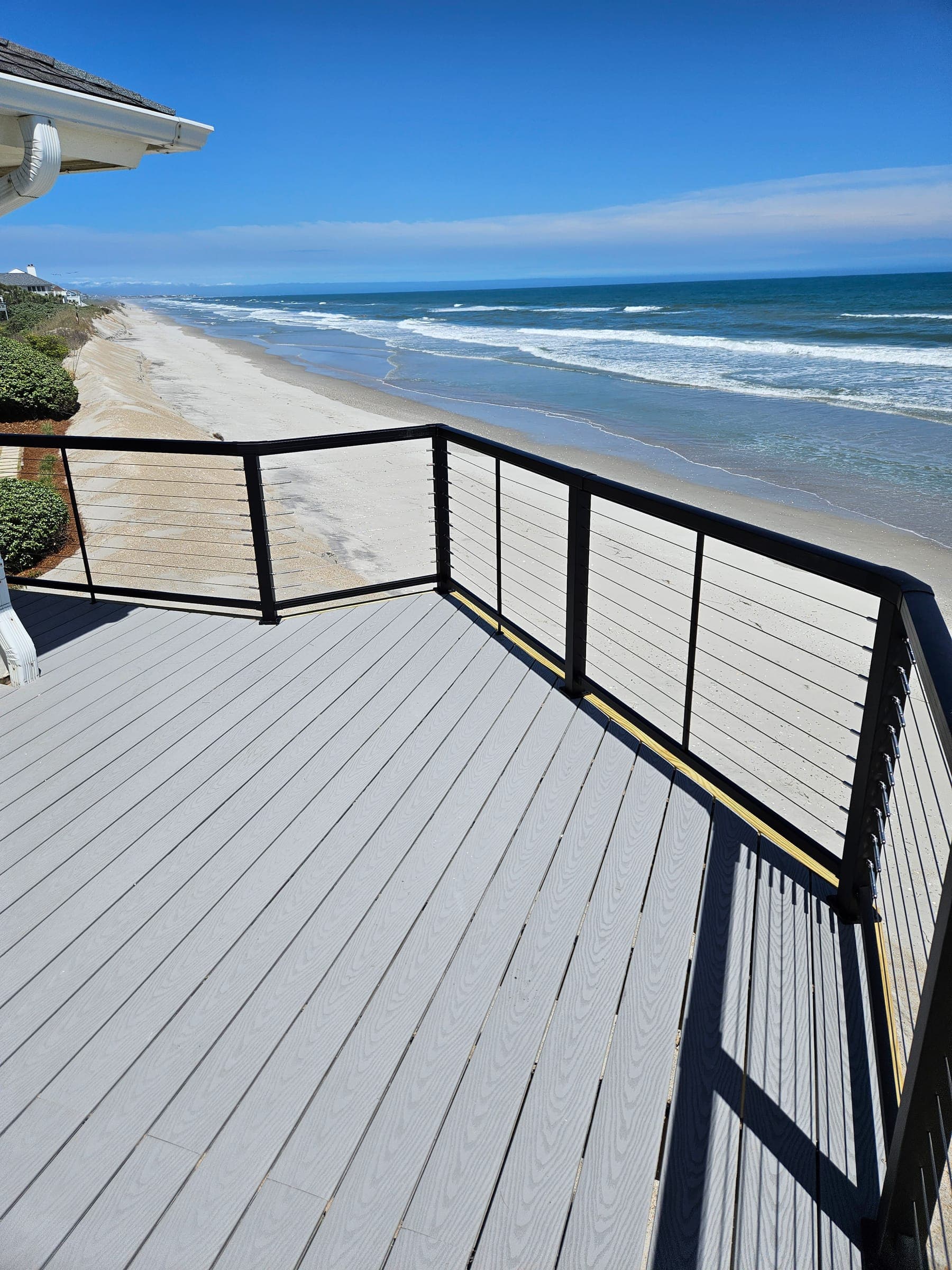
Every so often a homeowner asks us, quietly, whether we can just build the deck without pulling a permit. The answer is no, and by the end of this post we hope you'll agree that's the answer you want from your contractor.
Do you need a permit for a deck here?
Yes. In New Hanover County, new deck construction requires a building permit. That includes low decks. A common myth says decks under 30 inches off the ground are permit-free; the 30-inch threshold is about when guardrails are required, not whether you need a permit. For new deck construction in this county, plan on a permit regardless of height.
Keep in mind jurisdiction matters. Unincorporated New Hanover County, the City of Wilmington, Wrightsville Beach, Carolina Beach, and Kure Beach each handle their own permitting, and Pender and Brunswick counties have their own departments. The rules are similar because everyone enforces the North Carolina Residential Code, but the paperwork and fees go to different offices. Part of our job is knowing which counter your project belongs at.
What the permit process looks like
New Hanover County runs permit applications through its online COAST portal. For a typical residential deck, the submission includes a site plan showing the deck's location relative to property lines and setbacks, plus construction details: footing size and depth, framing layout, ledger attachment, post sizes, and railing height.
Once the permit is issued, the build gets inspected at set stages. Footing holes get looked at before concrete goes in, framing gets checked before decking covers it, and there's a final inspection when the job is done. On our projects, we schedule and meet the inspectors. You don't have to take a day off work for it.
What inspectors look for on coastal decks
Southeastern North Carolina is a high-wind region under the state residential code, and inspectors here take the structural details seriously, as they should. The recurring items:
- Ledger attachment. How the deck bolts to the house is the number one failure point in deck collapses nationally. Lag or through-bolt spacing and flashing get real scrutiny.
- Footings. Depth, diameter, and post-to-footing connections, especially in our sandy soils.
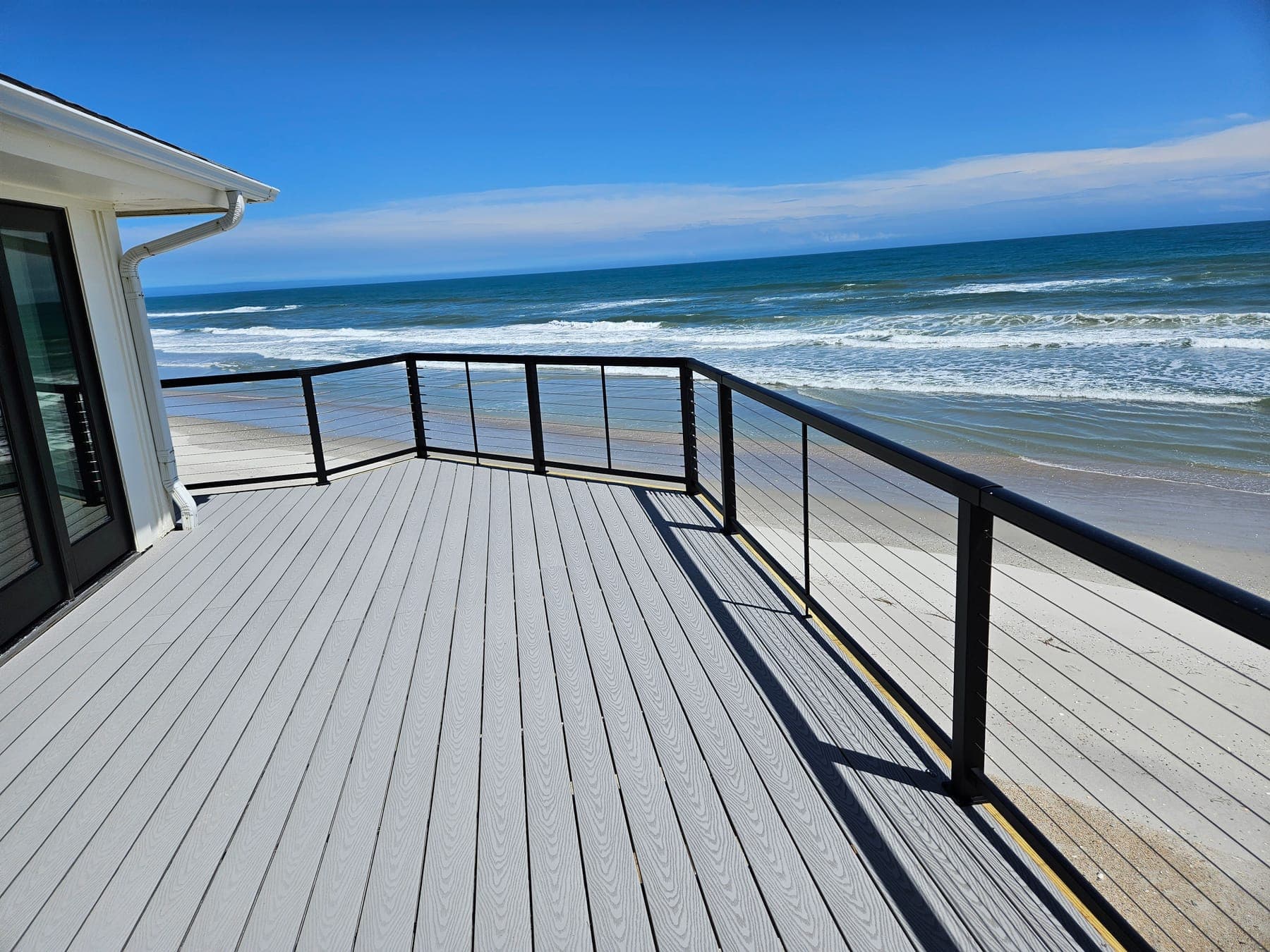
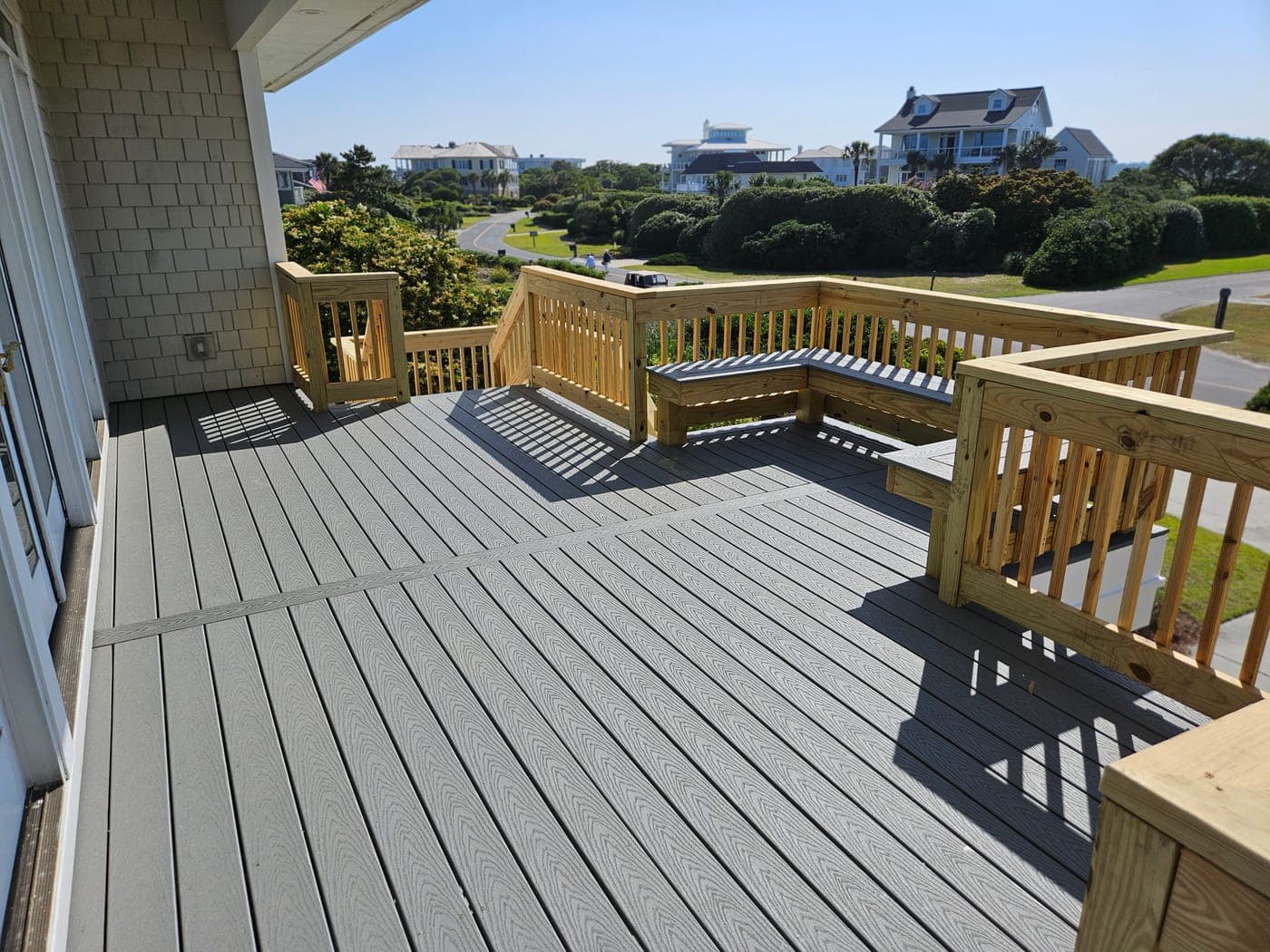
- Guards and stairs. Decks with a walking surface more than 30 inches above grade need guardrails at least 36 inches high, with pickets spaced so a 4-inch sphere can't pass through. Stair geometry and graspable handrails get checked too.
- Hardware. Connectors and fasteners have to be compatible with treated lumber and suited to the exposure.
Why unpermitted decks come back to bite
We get called to look at unpermitted decks all the time, usually at the worst possible moments. During a home sale, when the buyer's inspector flags it and the closing stalls. After a storm, when the insurance adjuster asks for documentation. Or when a homeowner wants us to enlarge an existing deck and we have to explain that the existing structure can't be extended as-built.
Fixing it after the fact means applying for a permit on finished construction, which can require opening things up so inspectors can see the framing and footings. That costs more than doing it right the first time, every time.
What it costs and how long it takes
Permit fees for a residential deck are modest, generally a small fraction of one percent of the project cost, and review times for straightforward decks are usually measured in days to a couple of weeks depending on the department's workload. We build that lead time into every schedule we quote.
We handle it so you don't have to
On every deck we build, permitting is part of the package: drawings, application, fees coordinated, inspections met. You get a deck with a paper trail, which protects you at resale and on insurance claims.
Planning a deck in New Hanover, Pender, or Brunswick County? Request a free written estimate on our estimate page and we'll spell out the whole process, permit included, before you commit to anything.
Pricing a project?
Get an instant range
Pick your project type and see a real price range in seconds — based on jobs we’ve actually completed around Wilmington.
Common questions
Do I need a permit for a deck under 30 inches tall in New Hanover County?
Yes. The 30-inch rule determines when guardrails are required, not whether a permit is needed. New deck construction in New Hanover County requires a building permit regardless of height.
Who pulls the deck permit, me or the contractor?
A licensed contractor should pull the permit for work they perform, and we handle the full process on our projects, including drawings, the application, and meeting inspectors on site.
What happens if I buy a house with an unpermitted deck?
It typically surfaces during inspections, appraisals, or insurance claims. Retroactive permitting is possible but can require exposing framing and footings for inspection, and any code shortfalls have to be corrected. It is worth pricing that out before you close.