June 20, 2026
Deck Maintenance Checklist for NC Beach Homes
By Coastal Concepts Construction · 3 min read
A season-by-season deck maintenance checklist built for salt air, humidity, and hurricane country, from a contractor who sees what neglect costs.
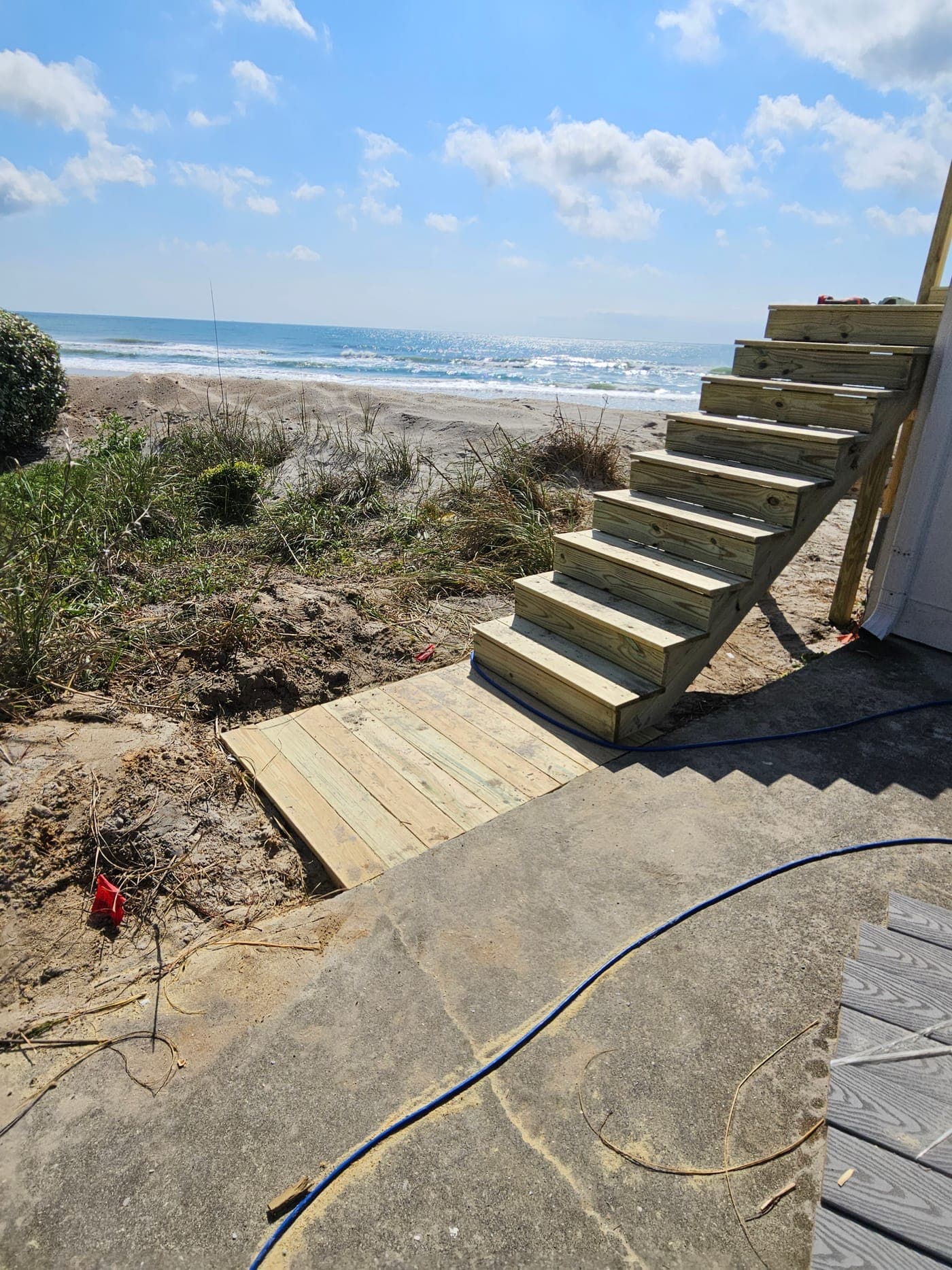
Most of the expensive deck problems we repair around Wilmington were cheap problems for years first. A $20 tube of flashing sealant ignored becomes a $4,000 ledger repair; a rusty joist hanger ignored becomes a rebuilt frame. Salt air doesn't forgive procrastination, so here's the maintenance rhythm we recommend for coastal decks, organized by season the way the coast actually works.
Spring (March-May): inspection season
Winter is over; find out what it did.
- Wash the deck. Deck cleaner or mild bleach solution for mildew, a thorough rinse, easy pressure if you use a machine. On composite, soap and water is the whole job.
- Do the water test on wood decks. Pour water on the sunniest boards. Beading means the finish is alive; soaking in means it's time to reseal. In our humidity, sealers give 1 to 2 years and stains 2 to 3, less oceanfront.
- Probe for rot. Screwdriver into the ledger, posts at grade, stair stringers, and any board that stays damp. Soft wood goes on the fix list now, not in August.
- Check fasteners and hardware. Popped nails, backing screws, and any connector showing flaking rust rather than surface discoloration. Near salt water, hardware fails before wood does.
- Refinish if the water test failed. Late spring, after the pollen drops, is one of the two best finish windows on this coast.
Early summer (June): storm-readiness
Hurricane season opens June 1. Before the tropics get busy: shake the railings hard, confirm posts are anchored and nothing wobbles, and inventory what has to come off the deck when a storm threatens: furniture, umbrellas, planters, the grill. Ten minutes of checking now beats improvising during a watch. If the spring probe turned up ledger or hardware issues, get them repaired before peak season; typical deck repairs run $800 to $6,500, and pre-season connection work sits mostly at the low end.
Through the summer: small habits
- Rinse salt film occasionally, especially oceanfront and especially on railings, cable, and light fixtures. Fresh water is the cheapest corrosion protection there is.
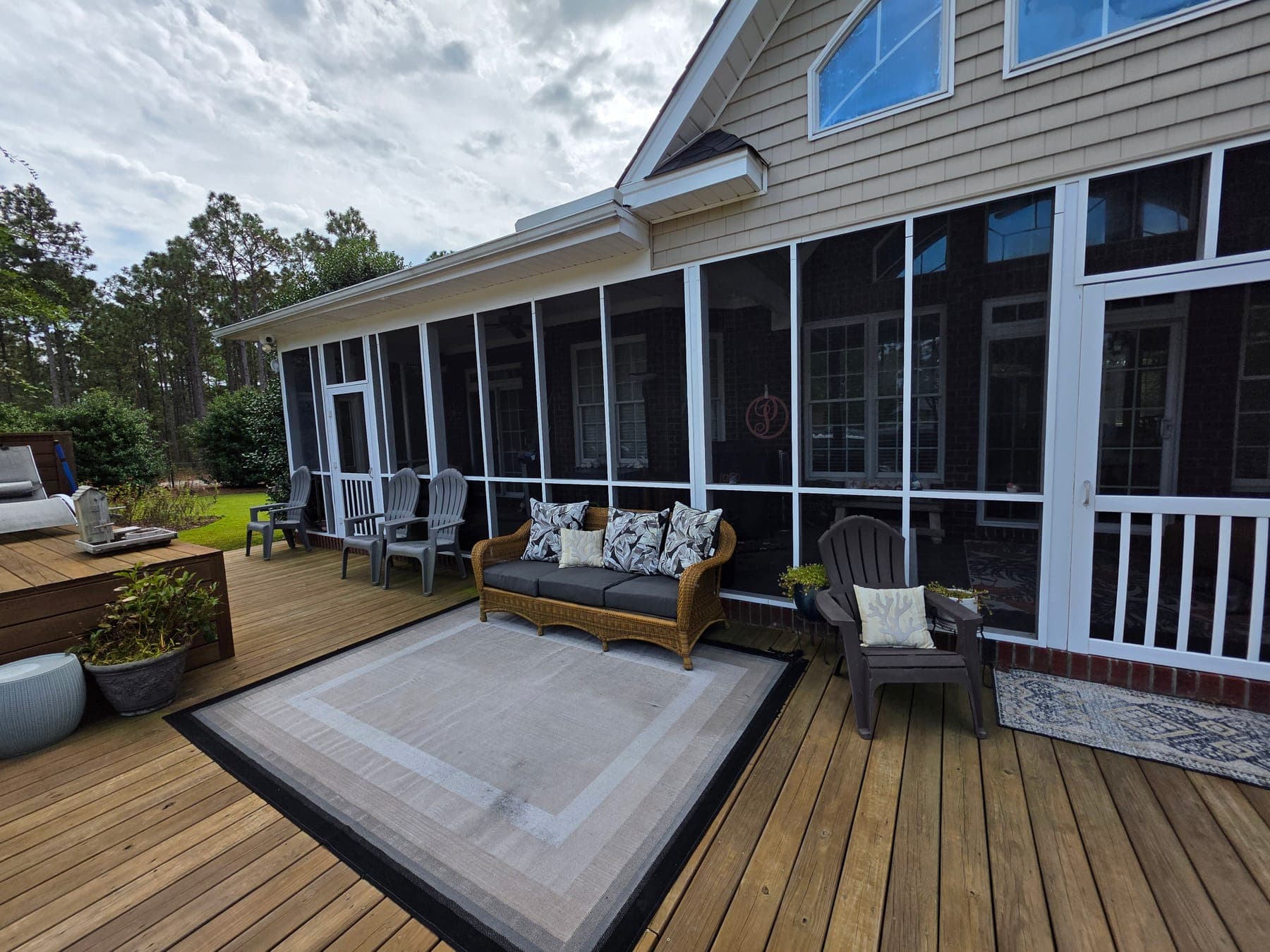
- Move the outdoor rug. Rugs, planters, and grill mats trap moisture against boards and print permanent shadows into wood and even composite. Lift them monthly.
- Trim vegetation back from the deck edges; shaded, airless corners are where mildew and rot start.
- Sweep sand. Underfoot, sand is an abrasive that grinds finish off wood decks board by board.
Fall (October-November): the second finish window
October's dry spells are the coast's best-kept maintenance secret. If spring got away from you, seal now and the deck rides through winter protected. Clean out gutters and under-deck drainage channels while the leaves come down, and give the deck one more wash so mildew doesn't overwinter in a dirty surface.
Winter (December-February): the walk-around
One good inspection on a mild day: look under the deck with a flashlight at hangers, post bases, and beams; check where downspouts discharge so winter rain isn't ponding at your footings; and plan any repair or rebuild work now, when contractor schedules and permit queues are at their yearly low. Winter is when the smart projects get signed.
The five-minute monthly version
No checklist survives a busy season, so here's the minimum: walk the deck barefoot once a month in season. Your feet find the splinters, the proud nail heads, and the soft spots before your eyes do. Anything that moves, squeaks new, or feels spongy gets a closer look.
When to call us instead
Maintenance is homeowner territory, and we'd rather you keep the deck healthy than pay us to rescue it. Call a pro when the probe finds soft framing, when hardware is visibly delaminating, when the deck moves underfoot, or when the ledger area shows staining or rot; those are structural items, and in a hurricane region they're not wait-and-see. If it's time for an assessment, a repair, or the rebuild the old deck has been asking for, request a free written estimate at our estimate page. We'll tell you honestly which side of the maintenance-versus-repair line your deck is on.
Pricing a project?
Get an instant range
Pick your project type and see a real price range in seconds — based on jobs we’ve actually completed around Wilmington.
Common questions
How often should a beach house deck be inspected?
Give it a thorough inspection every spring, a storm-readiness check each June, and a quick monthly walk-through in season. Salt air corrodes hardware faster than inland conditions, so coastal decks need eyes on them more often than the wood alone would suggest.
How do I keep salt air from damaging my deck?
Rinse the deck, railings, and hardware with fresh water regularly, keep the finish schedule current on wood, and use stainless or hot-dip galvanized hardware when anything is replaced. Salt does its worst work on metal that never gets rinsed.
What deck problems should not wait for a convenient season?
Soft wood at the ledger where the deck meets the house, flaking or delaminated connectors, wobbling posts, and any new movement underfoot. Those are structural warning signs, and in hurricane country they should be repaired promptly rather than watched.