May 5, 2026
Deck Lighting Ideas for Coastal NC Homes
By Coastal Concepts Construction · 4 min read
Deck lighting that survives salt air and actually gets used: layouts, fixture types, coastal-rated hardware, and what to run during the build.
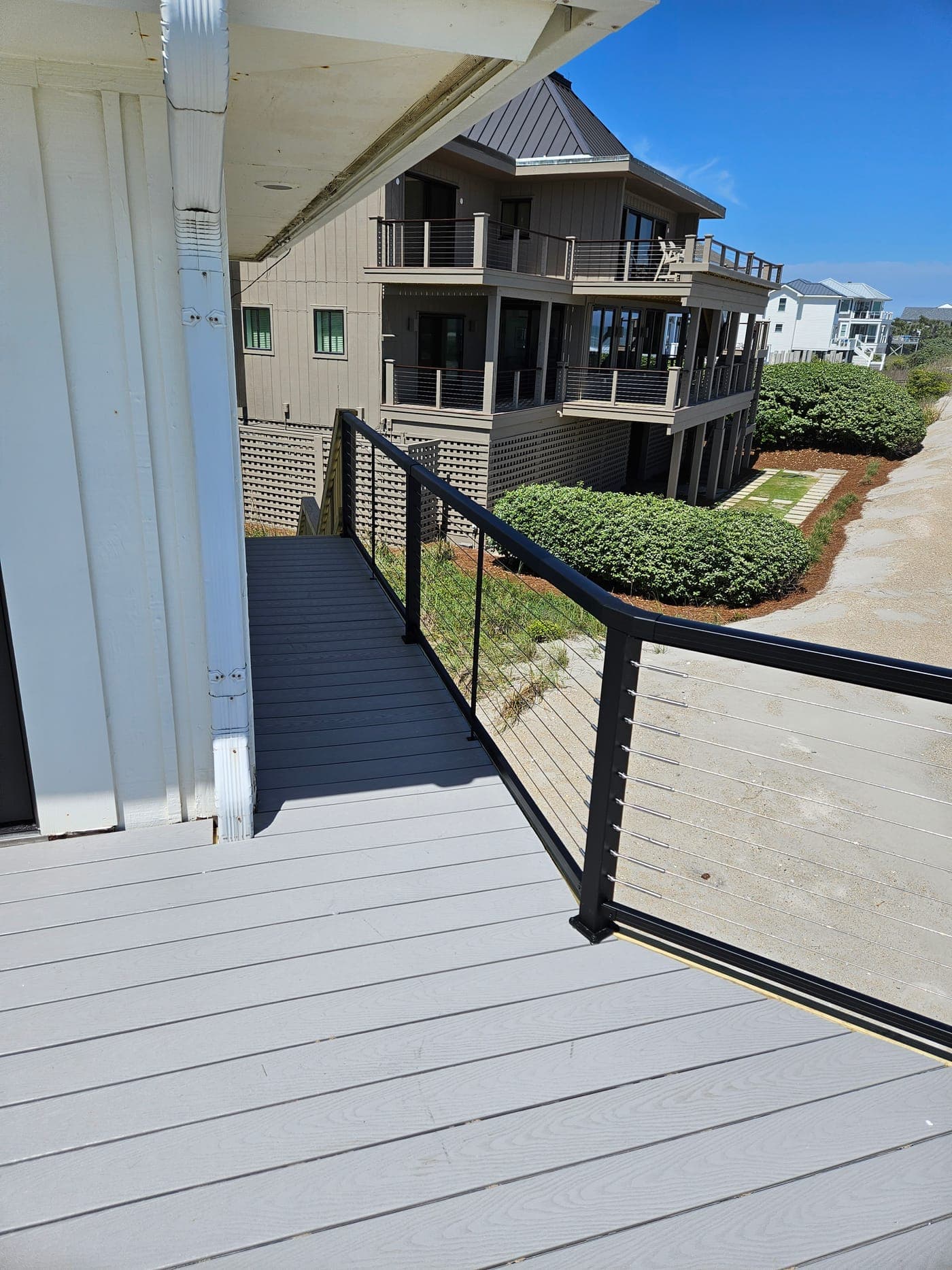
The best hours on a coastal deck are the ones after sunset, when the heat breaks and the breeze comes up off the water. Lighting is what makes those hours usable, and it's also the deck feature most often botched: too bright, badly placed, or corroded into darkness by the second summer. Here's how we approach deck lighting on the builds and retrofits we do around Wilmington.
Think in three layers
Good deck lighting isn't one bright fixture; it's three quiet layers.
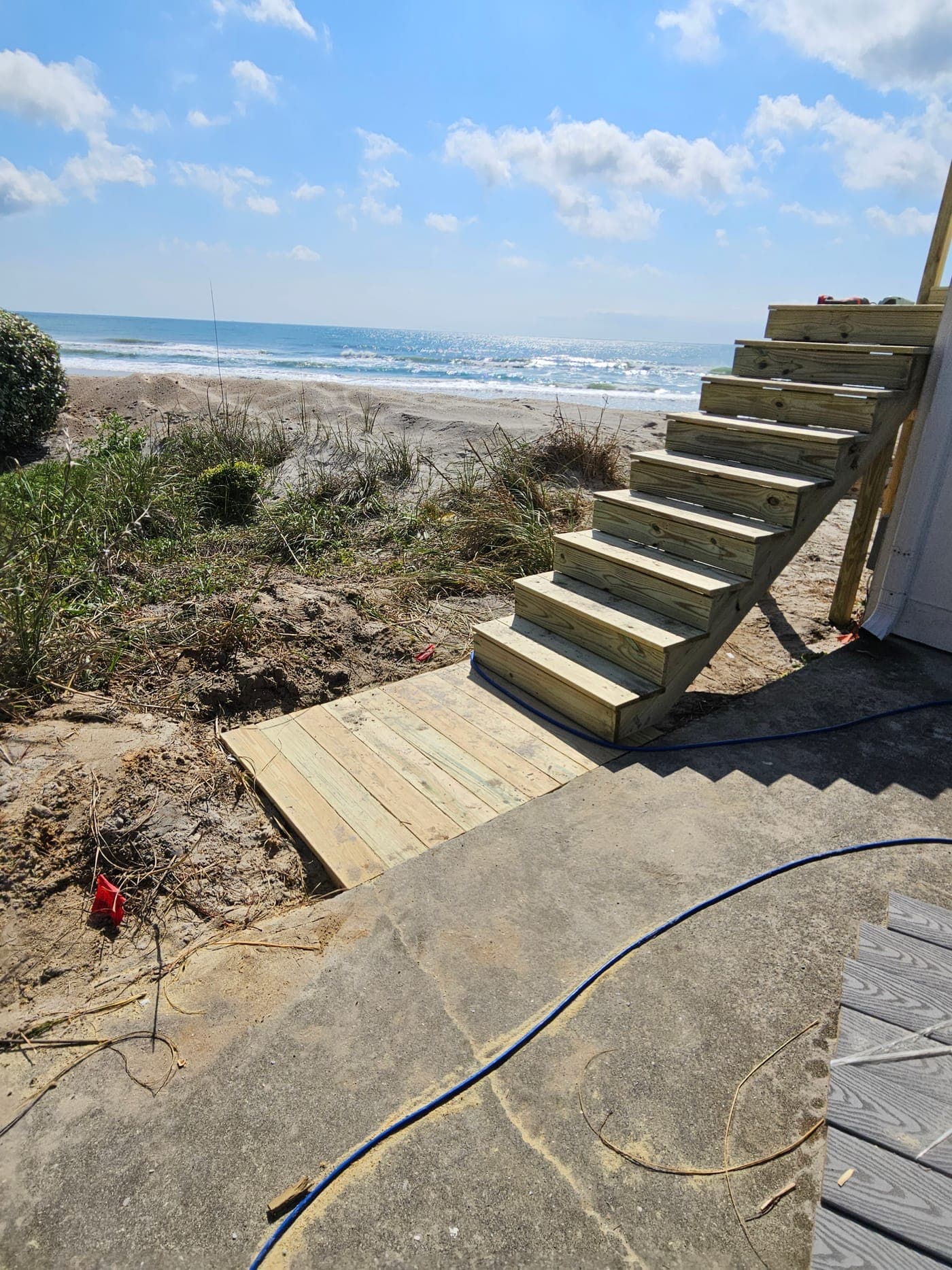
Safety lighting goes where feet go: recessed riser lights on every stair, small post-mounted or rail-mounted lights at level changes, and a soft wash at door thresholds. This layer is the non-negotiable one, and on stairs it's a genuine fall-prevention feature for guests carrying a tray of drinks down to the yard.
Task lighting goes where hands work, which on most decks means the grill. A dedicated downlight or an eave-mounted fixture over the grill zone saves the phone-flashlight-in-the-teeth routine and gets used four seasons a year.
Ambient lighting is the layer people fall in love with: string lights overhead on a porch or pergola, post-cap lights tracing the railing line, low-voltage wash on a nearby live oak. Warm color temperature, around 2700K, keeps it looking like firelight instead of a parking lot.
The coastal fixture rule: buy for the salt, not the catalog photo
Salt air is brutal on light fixtures. Bargain fixtures with thin plated finishes corrode fast near the water: pitted housings, seized screws, green-crusted contacts. What holds up:
- Marine-grade or coastal-rated fixtures, ideally 316 stainless, solid brass, or heavily powder-coated aluminum. Brass in particular ages to a patina instead of failing.
- Sealed LED units rather than fixtures with user-replaceable bulbs in sockets; sockets are where salt-laden moisture does its work.
- Coastal warranty terms. Read them; many mainstream fixture warranties exclude installations near salt water, which tells you what the manufacturer expects.
This is a category where the good stuff costs two or three times the cheap stuff and lasts ten times as long. We've replaced enough corroded builder-grade fixtures to say that with a straight face.
Low-voltage is your friend
Most deck lighting today runs on 12-volt low-voltage systems: safer around damp environments, simpler to route through framing, and efficient enough that an entire deck's lighting draws less than an old porch bulb. A transformer with a photocell and timer means the lights run themselves, on at dusk, off at bedtime, which matters for beach houses that sit empty between visits and for rental properties where guests won't manage switches.
Solar post caps are the no-wiring fallback, and modern ones are respectable for ambient glow, though they fade on cloudy stretches and rarely throw enough light for stairs. We use them where retrofit wiring isn't practical, not as the primary plan.
Wire it during the build
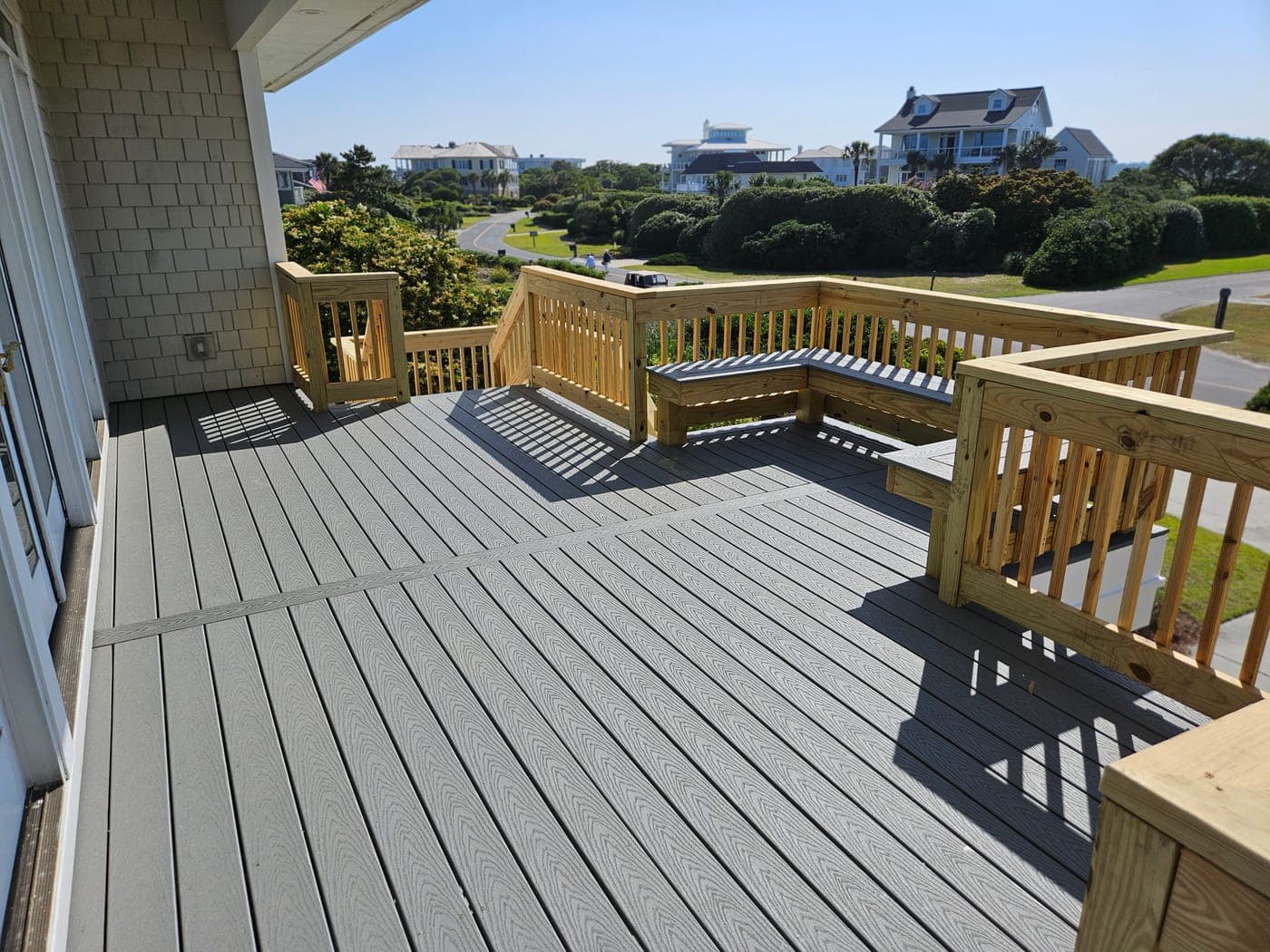
If there is one thing to take from this post: decide on lighting before the decking goes down. During construction, we can run wiring through joists and inside rail posts invisibly, place a transformer neatly, and rough in a switched circuit from the house. The same lighting added two years later means surface-mounted wire channels and compromises. Even clients unsure about lighting often have us run conduit and pull-strings during the build, cheap insurance that keeps every option open.
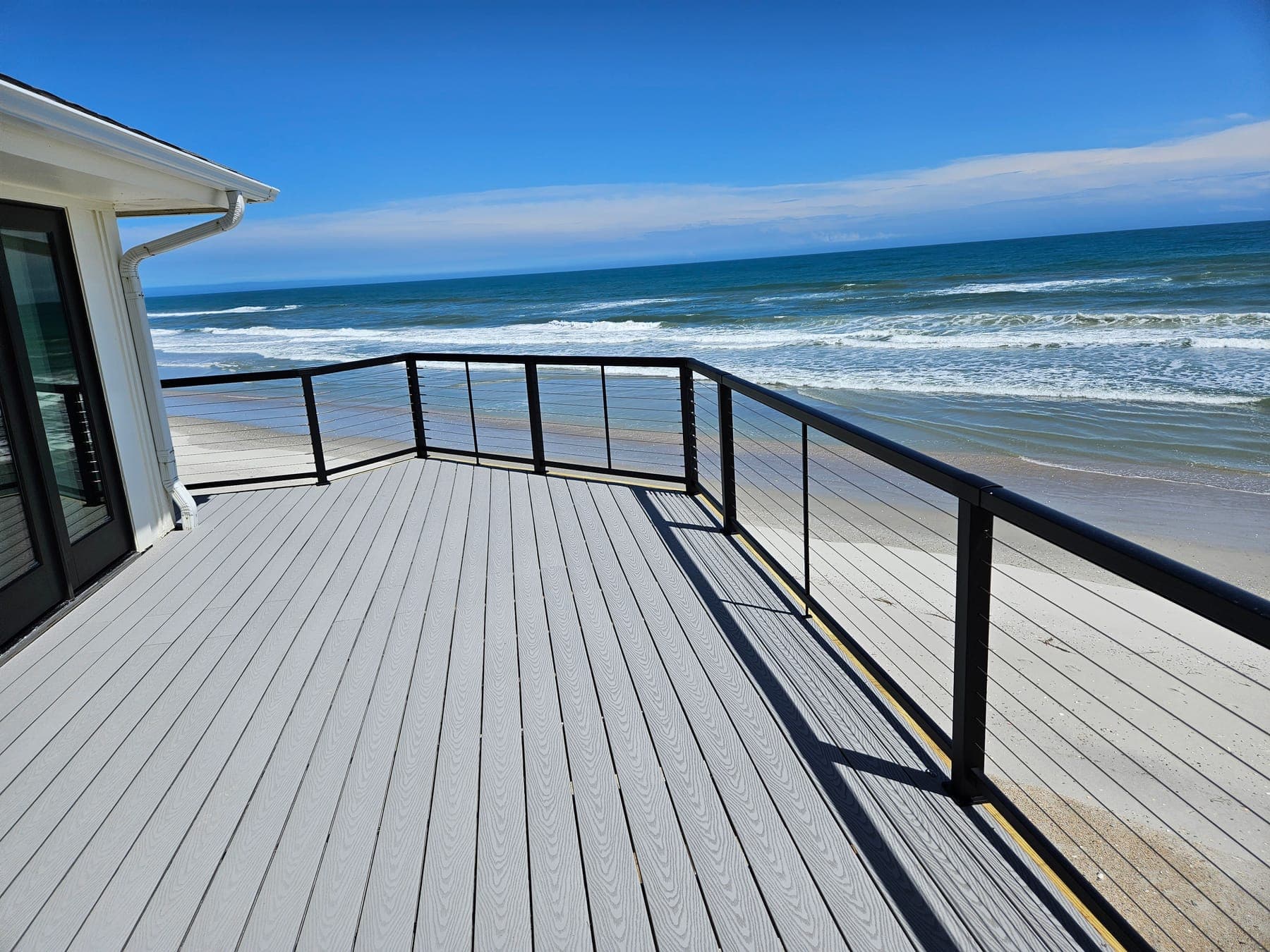
Retrofits are still absolutely doable, and they're a common small project for us, often bundled with a railing upgrade or repair work. Lighting rides along nicely whenever a deck is already opened up.
Keep it dark-sky and neighbor-friendly
On beach and marsh-front lots, less light is more. Aim fixtures down, shield sources, and skip anything that floods past your property line; your night sky over the water is part of what you paid for, and in sea-turtle nesting territory along our beach towns, local lighting rules during nesting season are one more reason to keep deck lighting low and warm.
Whether it's a new deck with lighting designed in, or a dark deck that needs bringing to life, request a free written estimate at our estimate page. We'll lay out a lighting plan with the rest of the project so the after-sunset hours get built in from the start.
Pricing a project?
Get an instant range
Pick your project type and see a real price range in seconds — based on jobs we’ve actually completed around Wilmington.
Common questions
What deck lighting holds up best in salt air?
Coastal-rated fixtures in 316 stainless steel, solid brass, or heavily powder-coated aluminum, with sealed LED units instead of exposed bulb sockets. Cheap plated fixtures corrode within a couple of seasons near the water, so this is the category to buy quality.
Can lighting be added to an existing deck?
Yes, retrofit lighting is a common small project for us. Wiring runs are just less invisible than they would be during construction, so if you're building new, have the wiring or at least conduit installed before the decking goes down.
Are solar deck lights good enough?
Modern solar post caps give a decent ambient glow and need no wiring, but they fade after cloudy days and rarely light stairs adequately. We treat them as a supplement or a retrofit fallback, with low-voltage wired lighting as the primary plan.