September 9, 2025
Deck and Fence Inspection After a Hurricane: A Checklist
By Coastal Concepts Construction · 3 min read
Wind and flooding stress decks and fences in ways that don't always show. Here's how we inspect them after a storm in the Wilmington area — and the failure points most homeowners miss.
After a hurricane or strong tropical system moves through southeastern North Carolina, decks and fences take a beating that isn't always obvious. A fence can be standing and still be failing. A deck can look fine from the back door and have connection damage underneath that turns dangerous the next time twenty people stand on it for a cookout.
We inspect a lot of decks and fences around Wilmington, Carolina Beach, and Hampstead after storms. This is what we check, in the order we check it.
Fences: Standing Isn't the Same as Sound
Wind loads a fence like a sail, and saturated soil lets posts rock in ways dry soil doesn't. After the storm, walk the full line and check:
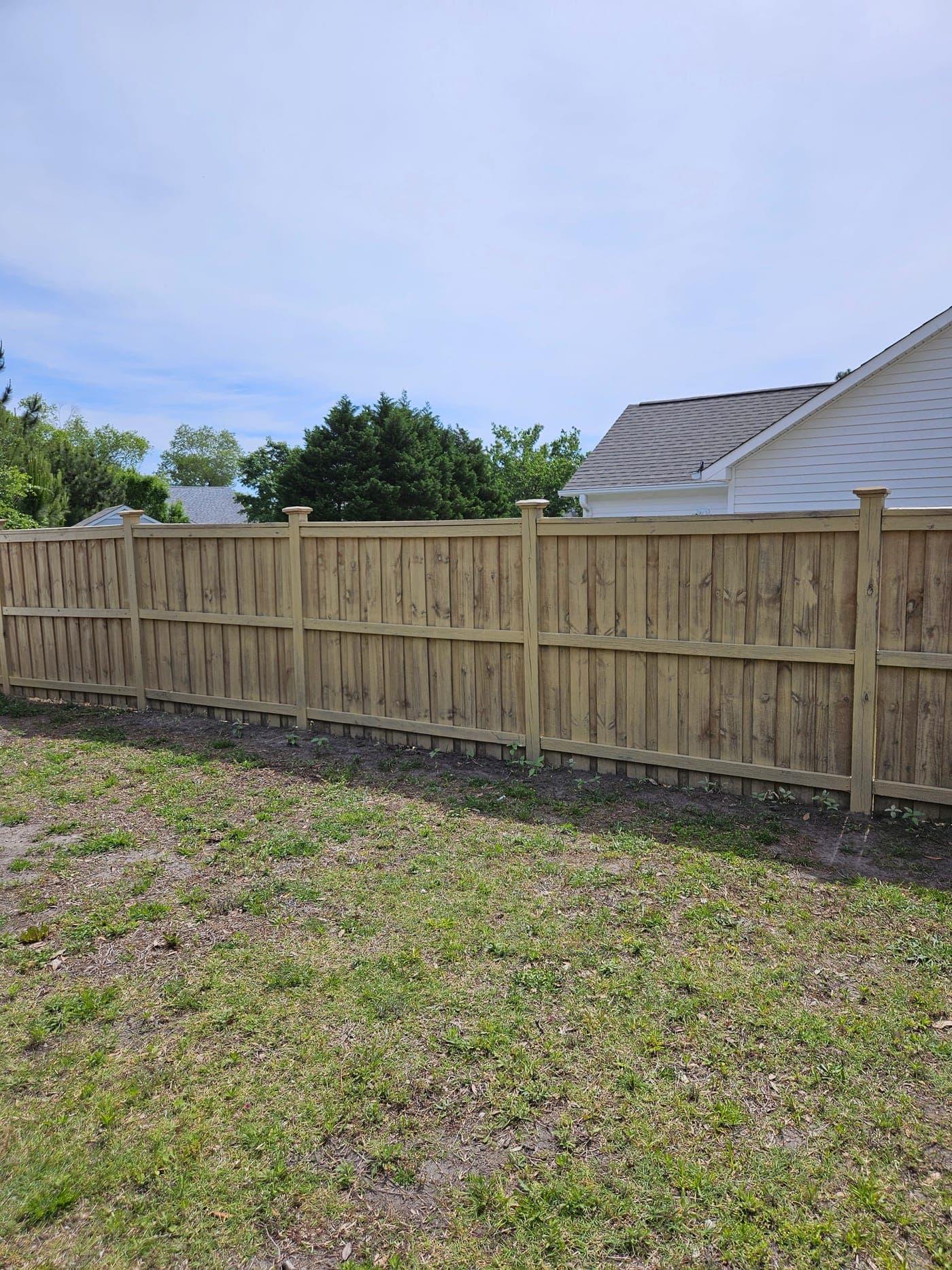
Post movement. Push firmly on each post. Any wobble means the post base or its concrete footing has loosened, or the post has rotted at grade — the most common failure point, since that's where water sits. A leaning section usually means several posts went at once.
Rails and pickets. Look for pulled fasteners, split rails at the post connections, and pickets that popped nails. Wind that lifts one picket loosens its neighbors.
Gates. Gates fail first because they're the heaviest point on the line and hinge hardware concentrates the load. Check that the gate still swings true, latches cleanly, and that hinge screws haven't pulled out of softened wood.
If more than about a third of a fence run is compromised, replacement often beats section-by-section repair — the remaining posts have usually been stressed too.
Decks: The Damage Hides at the Connections
Deck boards are the least important part of a deck. What holds people up is a chain of connections, and storms attack every link. Get underneath if you safely can, or check from the perimeter:
The ledger. This is the board that attaches the deck to the house, and it's the single most common source of deck collapse nationally. Look for any gap opening between ledger and house, water staining behind it, or corroded lag bolts. Wind uplift and flood buoyancy both work this connection loose.
Posts and footings. Flooding undermines footings and washes soil away from post bases. Look for posts that are no longer plumb, footings with exposed or eroded soil, and any post sitting in standing water.
Joist hangers and hardware. Salt-laden storm surge and wind-driven spray accelerate corrosion on galvanized hardware. Bright orange rust on hangers, missing hanger nails, or joists that dropped even slightly all warrant attention.
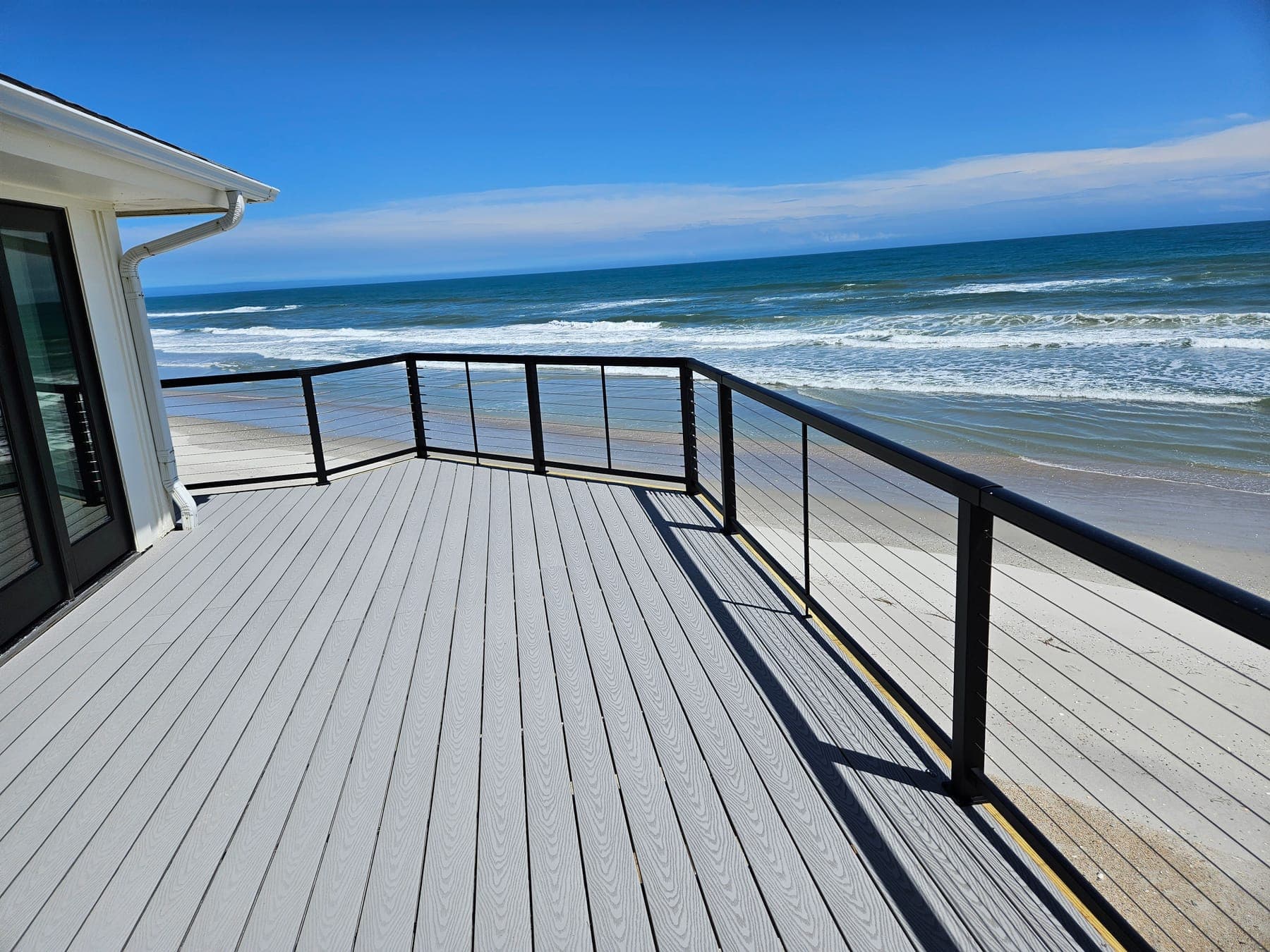
Railings. Grab and push every section. Coastal code exists because railings are life-safety — a railing that flexes more than it did before the storm has loosened connections.
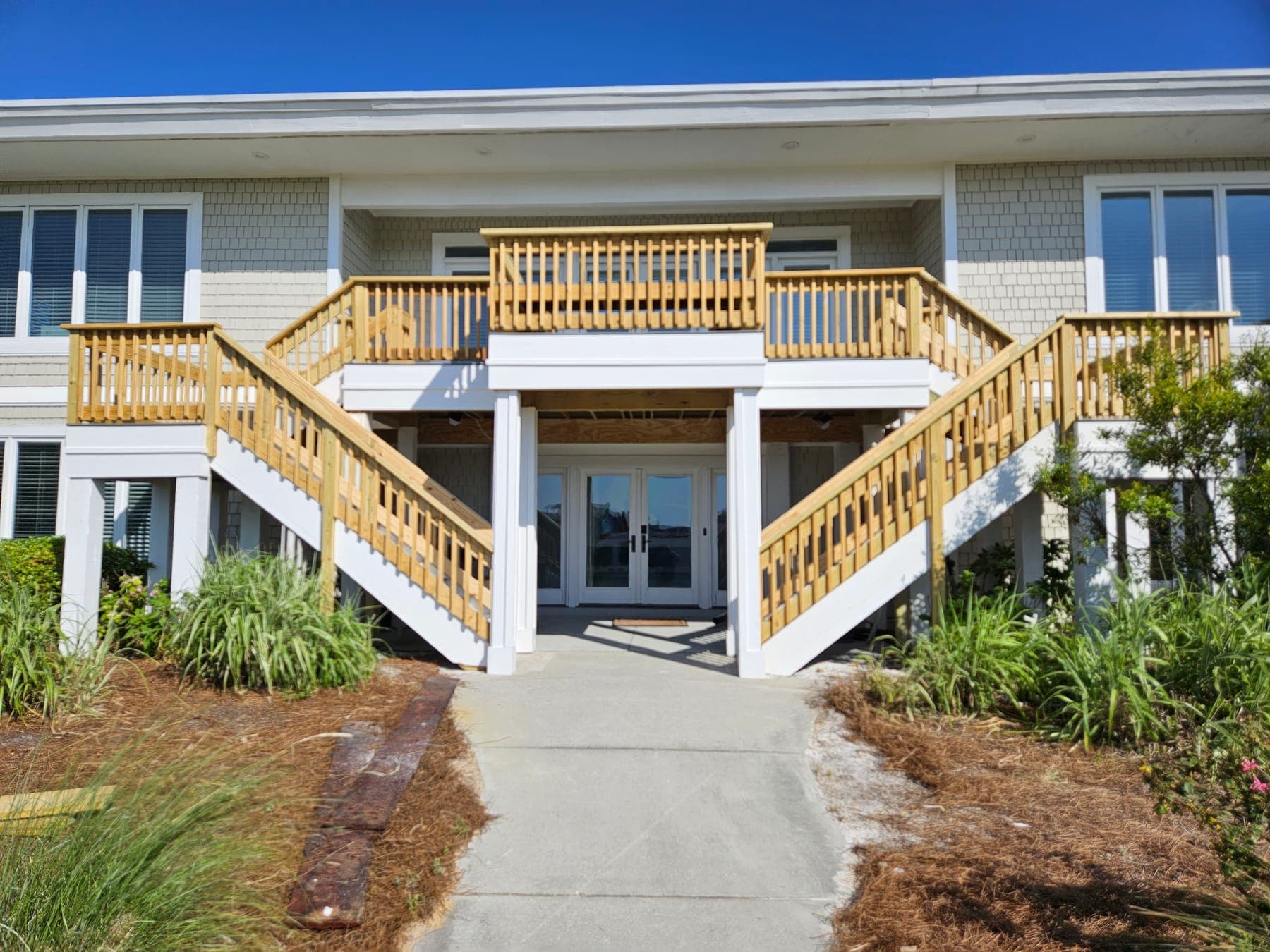
Stairs. Check stringer attachment top and bottom. Stairs shift when the ground under them moves.
Saltwater Flooding Is Its Own Problem
If your property took storm surge or brackish flooding — common near the Intracoastal Waterway and the beach towns — assume the salt is now in the wood and on every piece of hardware it touched. Rinse decks and fence lines with fresh water as soon as practical. Salt left in place keeps pulling moisture and keeps corroding fasteners for months after the water recedes.
Repair, Reinforce, or Replace
Our honest rule of thumb: cosmetic damage (boards, pickets, caps) is repair work. Connection damage (ledgers, posts, footings, hardware) is a structural conversation, and sometimes the right answer is rebuilding a section to current standards rather than patching a weak assembly. Modern hardware — through-bolted ledgers, hurricane-rated connectors, stainless fasteners near the water — costs a little more and holds dramatically better in the next storm.
Want a Second Set of Eyes?
If anything on your deck or fence moved, leaned, or loosened in the last storm — or you just don't want to crawl under the deck yourself — we'll take a look. We work all over the Wilmington area and we put everything in writing: what's damaged, what it needs, and what it costs. Request a free written estimate at /estimate.
Pricing a project?
Get an instant range
Pick your project type and see a real price range in seconds — based on jobs we’ve actually completed around Wilmington.
Common questions
My fence is leaning after the storm but not down. Can it be straightened?
Sometimes. If posts are sound and only the footings shifted in saturated soil, sections can often be plumbed and re-set. If posts snapped or rotted at grade — the most common failure — those posts need replacement. We check each post individually before recommending either.
What part of a deck is most likely to be damaged by a hurricane?
The connections, not the boards. The ledger attachment to the house, post footings undermined by flooding, and corroded joist hangers are the failure points that matter, and none of them are visible from the deck surface. Inspect from underneath or have a contractor do it.
Should I rinse my deck after storm surge flooding?
Yes. Salt left on wood and hardware keeps drawing moisture and corroding fasteners long after the flood recedes. Rinse decks, fences, and any exposed hardware with fresh water as soon as it's practical, then let everything dry before assessing repairs.