August 5, 2025
Composite vs. Pressure-Treated Decking for Coastal NC Homes
By Coastal Concepts Construction · 3 min read
A Wilmington contractor's honest comparison of composite and pressure-treated wood decking in salt air, humidity, and full coastal sun.
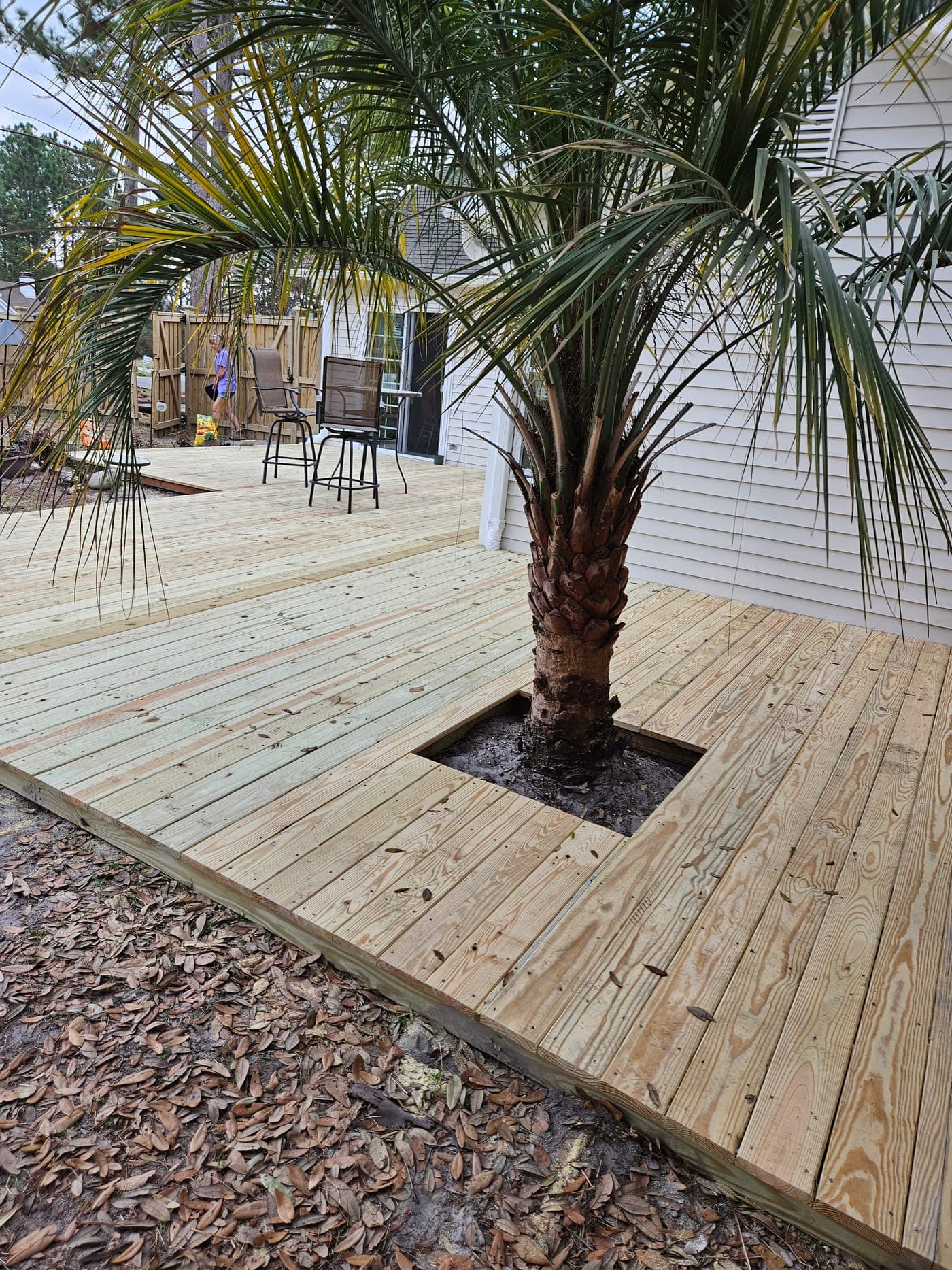
This is the decision that shapes every deck quote we write: composite or pressure-treated wood? Both can work on the coast. Both can also fail early if they're specified wrong. Here's how we think about it after building and repairing decks from Sneads Ferry down to Southport.
What the salt air actually does
People assume salt air eats decking boards. Mostly, it doesn't. What salt air destroys is metal: nails, screws, joist hangers, post bases. We tear out decks near the water where the boards are serviceable but the fasteners have rusted to powder. Whatever decking you choose, the hardware spec matters as much as the boards. Within sight of saltwater we use stainless fasteners, ideally 316 stainless, and hot-dip galvanized connectors rated for treated lumber.
What our climate does punish boards with is moisture and sun. Humidity swells wood, then summer sun bakes it dry. That cycle, repeated a few hundred times a year, is what cracks, cups, and splinters a wood deck.
The case for pressure-treated wood
Pressure-treated southern yellow pine is the workhorse. It's the cheapest decking you can buy, it's structurally strong, and every lumberyard in Wilmington stocks it.
The catch is maintenance. In coastal humidity, a PT deck needs cleaning and a fresh coat of sealer or stain roughly every one to two years to stay ahead of graying, checking, and mildew. Skip that cycle a few times and the boards start cupping and splintering, especially on south-facing decks with no shade.
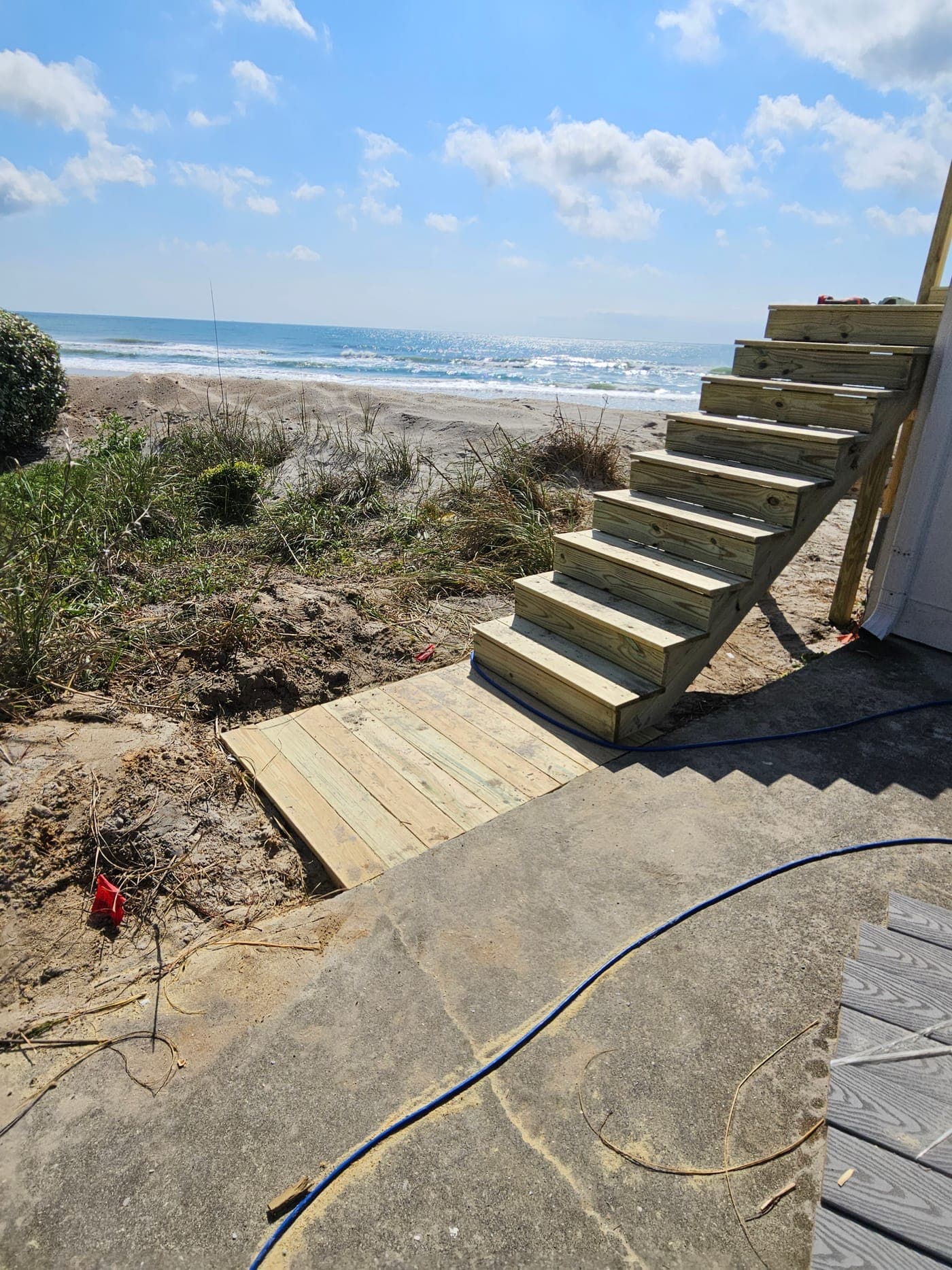
PT wood makes sense when the budget is the deciding factor, when the deck is shaded, or when it's a rental property that's going to take abuse regardless. It's also the right call for framing on virtually every deck we build, composite included, since composite is a surface material, not a structural one.
The case for composite
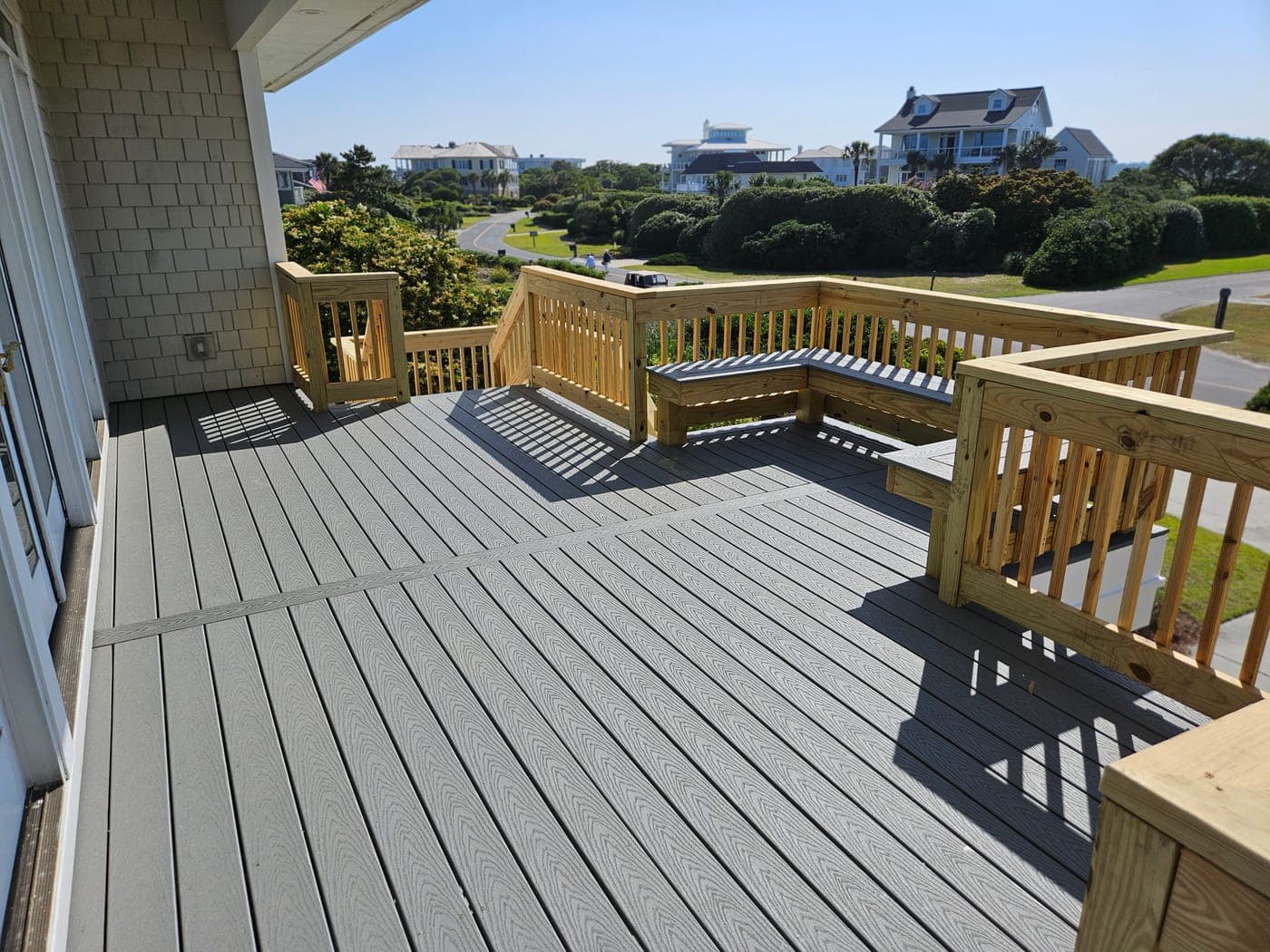
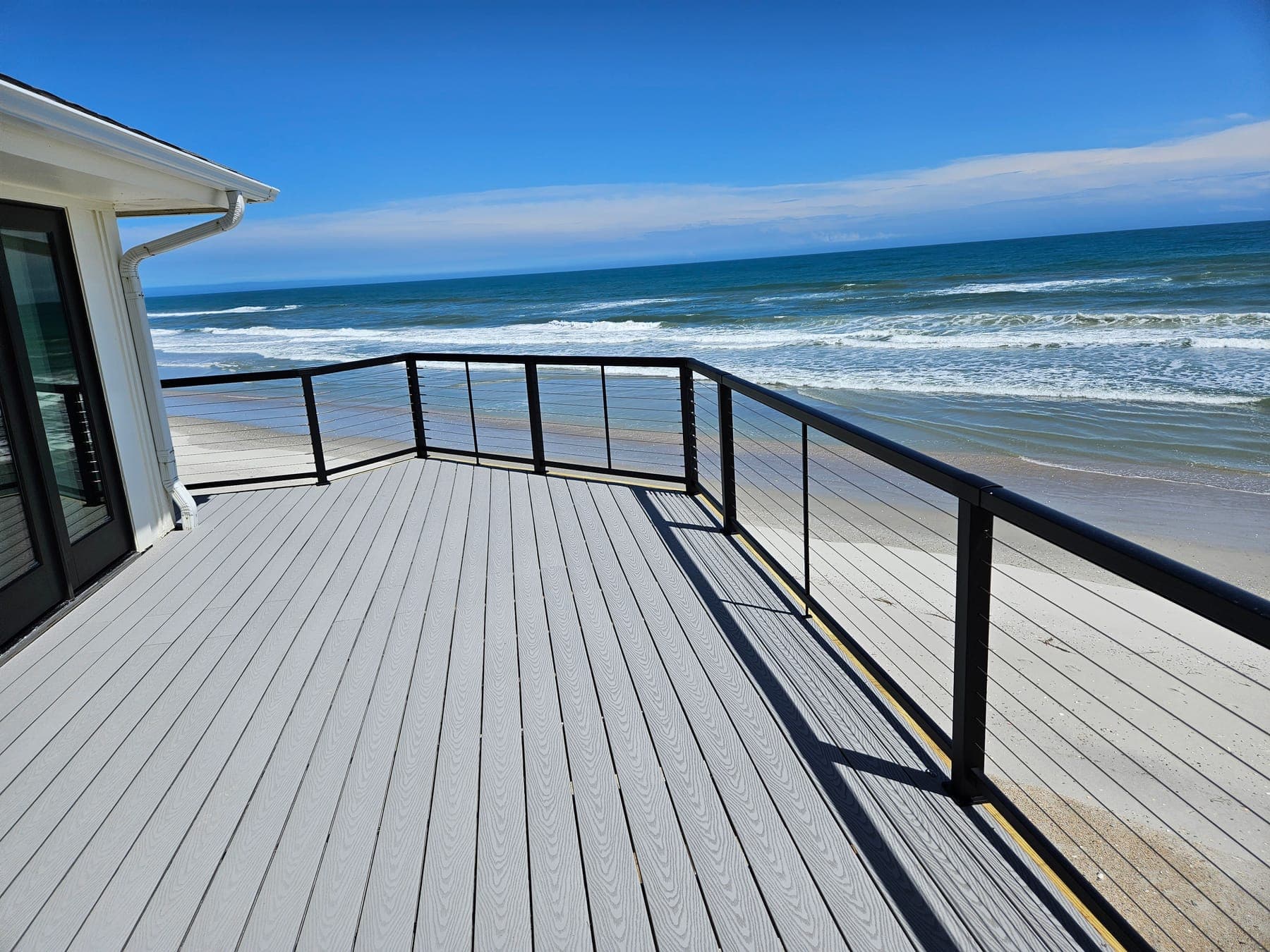
Modern capped composite boards resist rot, insects, and moisture, and they don't need staining. In our climate that's not a small perk, it's the whole argument. The upfront cost is real, often adding thousands to a mid-size deck, but you're buying out of a chore that comes due every year or two for the life of the deck.
A few honest caveats we share on estimates:
- Heat. Dark composite gets hot in direct July sun, hotter than wood. If the deck faces south with no shade, pick a lighter color or plan for a covered section.
- It still needs washing. Salt film, pollen, and mildew show up on composite too. A soap-and-water wash once or twice a year keeps it right.
- The frame is still wood. A composite deck on a rotting PT frame is lipstick. Frame protection, flashing, and drainage details are where a builder earns the money.
- Not all composite is equal. Uncapped older-generation boards stained and faded. Stick with capped product lines from established manufacturers with real coastal warranties.
How we help clients decide
We usually frame it as a ten-year question. If you'll live in the house long enough to reseal a wood deck five or six times, and you'd rather not, composite pays for itself in weekends. If you're flipping the property, renting it, or working with a firm budget, PT wood with quality hardware is a legitimate build, not a compromise.
House location matters too. Oceanfront and Intracoastal properties get more salt, more wind-driven rain, and more sun than a lot in Leland or Hampstead. The closer to the water, the stronger the composite argument, and the more critical the stainless hardware becomes either way.
Get a side-by-side quote
The clean way to decide is to see both numbers for your actual deck. We regularly quote projects both ways, same footprint, same railing, wood versus composite, so you can see the real gap instead of guessing at it.
If you're weighing materials for a new deck anywhere in the Wilmington area, head to our estimate page and request a free written estimate. We'll price it both ways and tell you plainly which one we'd put on our own house given your lot.
Pricing a project?
Get an instant range
Pick your project type and see a real price range in seconds — based on jobs we’ve actually completed around Wilmington.
Common questions
Does composite decking hold up better than wood in salt air?
The boards themselves handle coastal weather better because they don't absorb moisture or need sealing. But salt air mainly attacks metal hardware, so the fastener and connector spec matters just as much as the decking material on any coastal deck.
How much more does composite cost than pressure-treated wood?
On a typical deck, composite decking and railing can add several thousand dollars versus wood. Most new decks we build fall between $8,000 and $18,000, and material choice is one of the biggest reasons a project lands at the top or bottom of that range.
Does composite decking get too hot for bare feet?
Darker composite colors in full summer sun can get uncomfortably hot, hotter than wood. On unshaded south-facing decks we steer clients toward lighter board colors or a partially covered design.