November 18, 2025
Automatic Gate Repair: 6 Failures We See Most on the Coast
By Coastal Concepts Construction · 3 min read
When a driveway or community gate stops working near Wilmington, it's usually one of six things. Here's what fails, why the coast makes it worse, and what repairs typically cost.
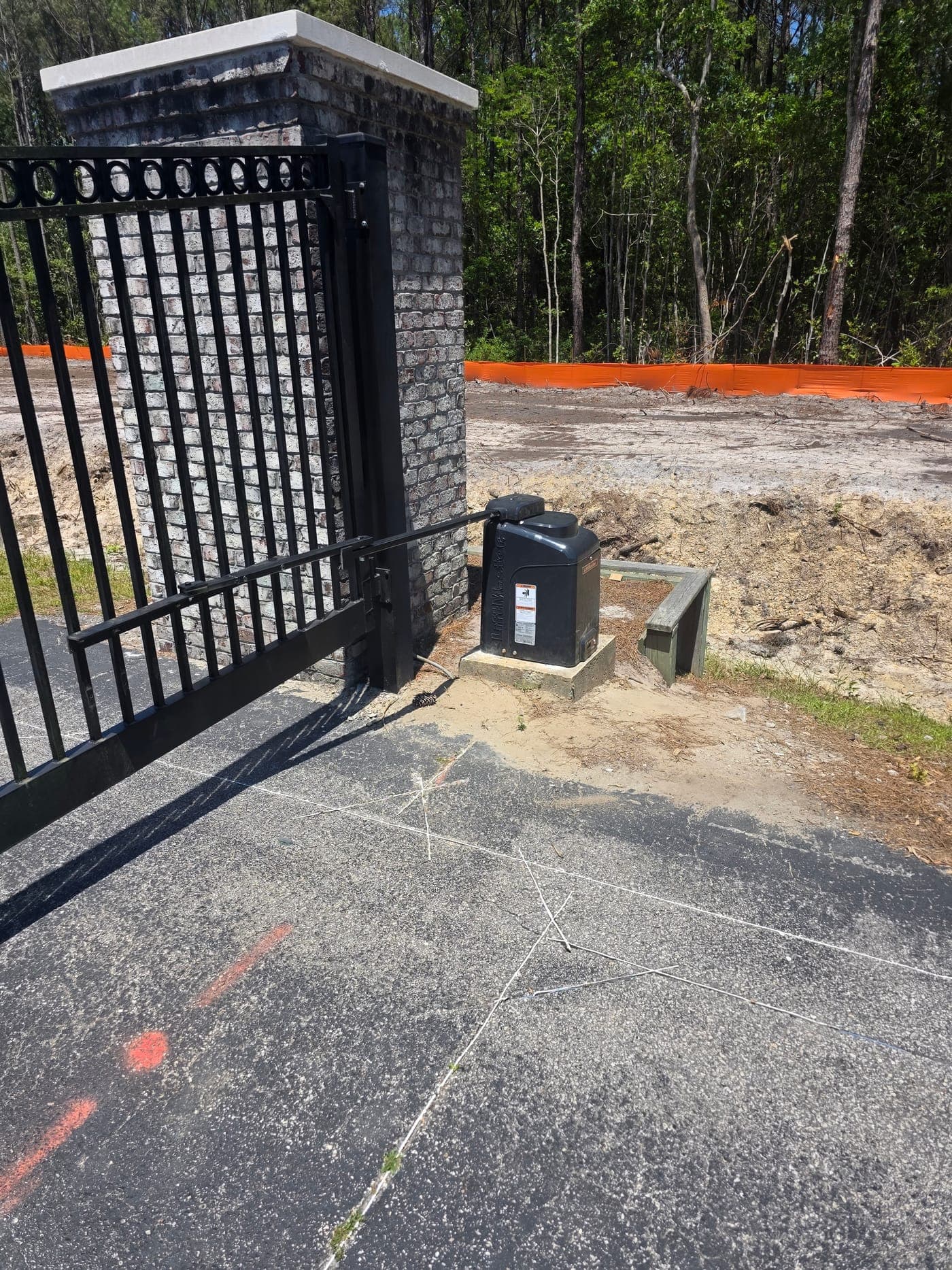
We install and service automatic gates all over the Wilmington area — residential driveway gates, HOA entrances, and commercial access points. When the phone rings because a gate quit, the cause is almost always one of six things. Knowing which one you're dealing with helps you describe the problem, avoid getting oversold, and understand the repair bill. Most gate repairs we do land between $250 and $1,800 depending on what failed.
1. Dead or Dying Batteries
The most common failure, and the most commonly misdiagnosed. Most gate operators run on batteries charged by AC power or solar. When batteries age out, the gate gets slow, works in the morning and quits by afternoon, or opens but won't close. Coastal heat shortens battery life, and after a power outage — something we see plenty of in storm season — a weak battery that was limping along often dies outright. This is the cheap end of the repair range.
2. Corroded Wiring and Connections
Salt air is merciless on low-voltage connections. Terminals inside the operator cabinet, splices to safety loops, and connections at keypads corrode until signals get flaky. The symptom is intermittent, maddening behavior: the gate works four times, fails once, works again. Intermittent problems are almost always electrical, and on the coast, corrosion is the first suspect. Cleaning and re-terminating connections is straightforward; chasing a corroded splice buried in conduit takes longer.
3. Photo Eyes and Safety Sensors Out of Alignment
Every properly installed gate has entrapment protection — photo eyes, sensing edges, or both, per the UL 325 safety standard that governs gate operators. When a photo eye gets knocked crooked by a trash can, fogged by salt film, or blocked by landscaping growth, the gate refuses to close, because it thinks something is in the way. If your gate opens fine but won't close, check the photo eyes before calling anyone. Wiping the lenses and checking alignment fixes a surprising share of these calls.
4. Hinge and Roller Wear
Swing gates hang on hinges; slide gates ride on rollers and track. Both are wear items, and salt accelerates both. A swing gate that's sagged out of level binds and strains the operator; a slide gate with flat-spotted rollers grinds and stutters. The tell is noise and visible movement problems — and an operator that's straining against a mechanical problem will burn itself out if you keep running it. Hardware repairs sit in the middle of the cost range; catching them early keeps them there.
5. Failed Operator Boards and Motors
The operator's control board is its brain, and lightning, power surges, and moisture intrusion kill boards regularly in our climate. Motors and gearboxes wear out too, especially on gates cycling dozens of times a day at apartment communities. Board and motor replacements are the upper end of typical repair costs — and on operators past 10–12 years old, we'll tell you honestly when replacement math beats repair math.
6. Vehicle Loop and Keypad Failures
In-ground detection loops crack with pavement movement, and keypads and card readers corrode internally. Symptoms: the gate won't open for exiting cars, or residents' codes work intermittently. Loop repairs involve saw-cutting pavement, so they're quoted case by case; keypad swaps are routine.
What You Can Check Before Calling
Confirm power at the operator, look for a tripped breaker or unplugged charger, wipe and sight the photo eyes, and watch one full cycle listening for grinding or binding. Then tell your repair company exactly what it does and doesn't do — "opens but won't close" points to safety sensors, "dead entirely" points to power, "grinds and stalls" points mechanical.
Coastal Gates Need Coastal Service
Every failure on this list happens faster within a few miles of salt water. Twice-a-year service — clean connections, lubricate hardware, test safety devices, load-test batteries — is the difference between a $300 visit and an $1,800 one. We service most gate and operator brands across New Hanover, Brunswick, and Pender counties. If your gate is acting up, describe it at /estimate and we'll get you a free written estimate.
Pricing a project?
Get an instant range
Pick your project type and see a real price range in seconds — based on jobs we’ve actually completed around Wilmington.
Common questions
Why does my gate open but refuse to close?
That's the classic sign of a safety sensor issue. Gate operators are designed not to close when photo eyes are blocked, misaligned, or dirty — common on the coast where salt film builds on lenses. Wipe the eyes, check they point at each other, and clear any landscaping. If that doesn't fix it, the sensor wiring may be corroded.
How much does automatic gate repair cost?
Most repairs we do in the Wilmington area fall between $250 and $1,800. Batteries and sensor fixes sit at the low end; hinge and roller work in the middle; control boards, motors, and in-ground loop repairs at the top. An honest shop diagnoses before quoting.
How often should a coastal automatic gate be serviced?
Twice a year is the right cadence near salt water. Service should include cleaning and protecting electrical connections, lubricating hinges or rollers, load-testing batteries, and testing all UL 325 safety devices. Salt accelerates every wear mechanism a gate has, and small problems left running destroy operators.