February 17, 2026
Access Control for HOAs: What Communities Get Wrong
By Coastal Concepts Construction · 3 min read
For HOA boards and community managers: how to think about gates, keypads, remotes, telephone entry, and credential management — and the mistakes that make gated communities less secure.
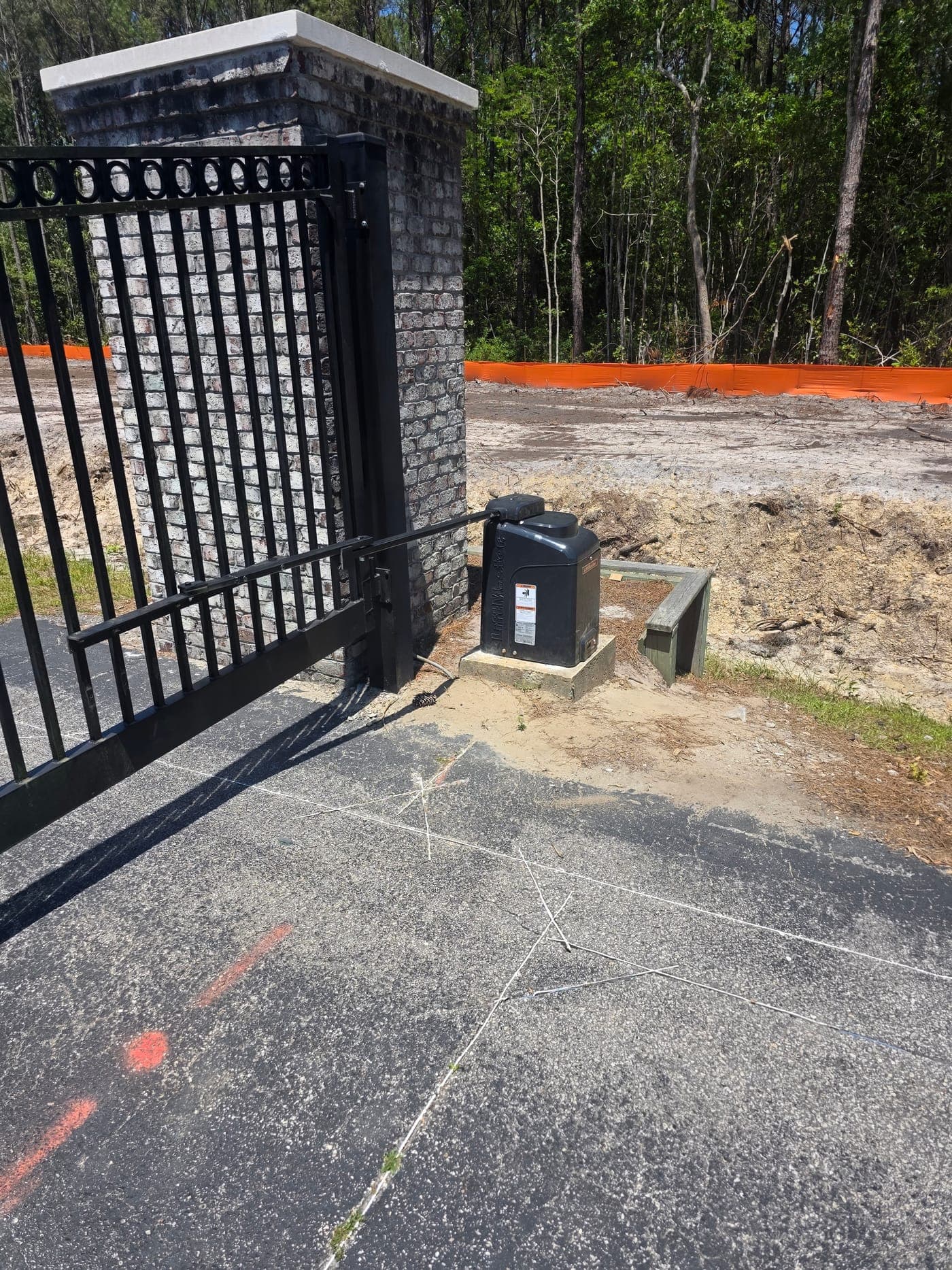
We service community gates and access control across the Wilmington area, and we've seen the full range: systems that quietly work for a decade, and systems that generate a board-meeting agenda item every month. The difference is rarely the brand on the keypad. It's whether the community matched the system to how it actually operates — and whether anyone manages the credentials after installation. Here's what we walk boards through.
Start With Traffic, Not Hardware
Before any equipment talk, answer four questions:
- How many vehicles enter at peak (the 5–6 p.m. wave)?
- How do guests, deliveries, and service vehicles get in?
- Who administers the system — a management company, or a volunteer?
- What happens when it breaks on a Friday night?
A 40-home neighborhood with one entrance and a part-time manager needs a very different system than a 400-unit community with contractor traffic all day. Most access-control regret we see traces to buying hardware before answering question 3.
The Credential Menu, Honestly
Keypads with codes are cheap and simple — and codes travel. Every resident's landscaper, dog sitter, and former tenant ends up with the gate code, and a community-wide code change is a resident-relations event. Fine as a secondary method; weak as the only one.
Remotes and windshield tags (RFID) give residents hands-free entry and give the community individually revocable credentials — when someone moves out, you kill their tag, not everyone's code. Tag readers handle the 5 p.m. wave far better than keypads.
Telephone entry and app-based systems solve the guest problem: visitor dials from the gate, resident answers on a cell phone and opens the gate from anywhere. Modern cloud systems add per-visit codes and entry logs. They need reliable connectivity at the gate — worth confirming before you commit, not after.
Cameras at the entrance don't open anything, but a camera that captures plates at the gate turns "someone hit the exit arm" from a mystery into an insurance claim.
Layered is normal: tags for residents, phone/app for guests, a trades code that changes on a schedule, camera on the approach.
Credential Hygiene Is the Whole Game
Here's the uncomfortable truth about gated communities: most aren't compromised by hardware failure. They're compromised by credential rot. Ten years of move-outs with no tag deactivation, one gate code unchanged since installation, and a "temporary" vendor code from 2019 that half the county knows. The gate works perfectly; it just opens for everyone.
The fix is procedural and cheap: credentials tied to the unit (not the person's memory), deactivation as a standard step in every move-out and closing, vendor codes on automatic expiration, and an annual audit of active credentials against the current resident list. If your management agreement doesn't say who does this, nobody does it.
Plan for Failure Modes
Every gate system fails sometime — power outage, lightning, a board taking a surge. What separates a nuisance from a crisis is planning:
- Battery backup sized for storm-season outages, tested on a schedule (a backup battery that's five years old is a rumor, not a backup)
- Fail-safe behavior decided in advance: most communities choose gates that open and stay open on extended power loss — trapping residents in is worse than a night unguarded
- Emergency access for fire and EMS per your local fire district's requirements — confirm what your district uses and keep it working
- A service contract with real response times, because a gate stuck closed is an access emergency for every resident and their pizza delivery alike
Budget Reality
Boards understandably ask for numbers early. Full system installations vary too widely with lane count, connectivity, and equipment to quote honestly unsight-unseen. What we can say: routine repairs on gate and access equipment typically run $250 to $1,800, and a maintenance agreement that services the system twice a year costs far less than the emergency calls it prevents.
If your community's system is aging, misbehaving, or overdue for a credential audit, we'll assess it and put recommendations in writing — no obligation. Reach us at /estimate for a free written evaluation.
Pricing a project?
Get an instant range
Pick your project type and see a real price range in seconds — based on jobs we’ve actually completed around Wilmington.
Common questions
What's the most secure gate credential for an HOA?
Individually revocable credentials — RFID tags, remotes, or app accounts tied to each unit — beat shared keypad codes decisively, because a departing resident's access can be killed without disrupting anyone else. Shared codes spread to landscapers, sitters, and former tenants within months and are best used only as a managed secondary method.
Should a community gate open or close during a power outage?
Most communities configure gates to open and remain open on extended power loss, after battery backup is exhausted. Trapping residents and blocking emergency vehicles is a worse outcome than an unguarded night. The right answer should be decided by the board in advance and documented — and emergency access for fire and EMS confirmed with your local fire district.
How often should HOA gate systems be serviced?
Twice a year in coastal conditions. Salt air corrodes connections, batteries age fast in heat, and safety devices drift out of alignment. Service should cover operator mechanics, battery load tests, UL 325 safety device testing, and — just as important — an audit of active credentials against the current resident list.